

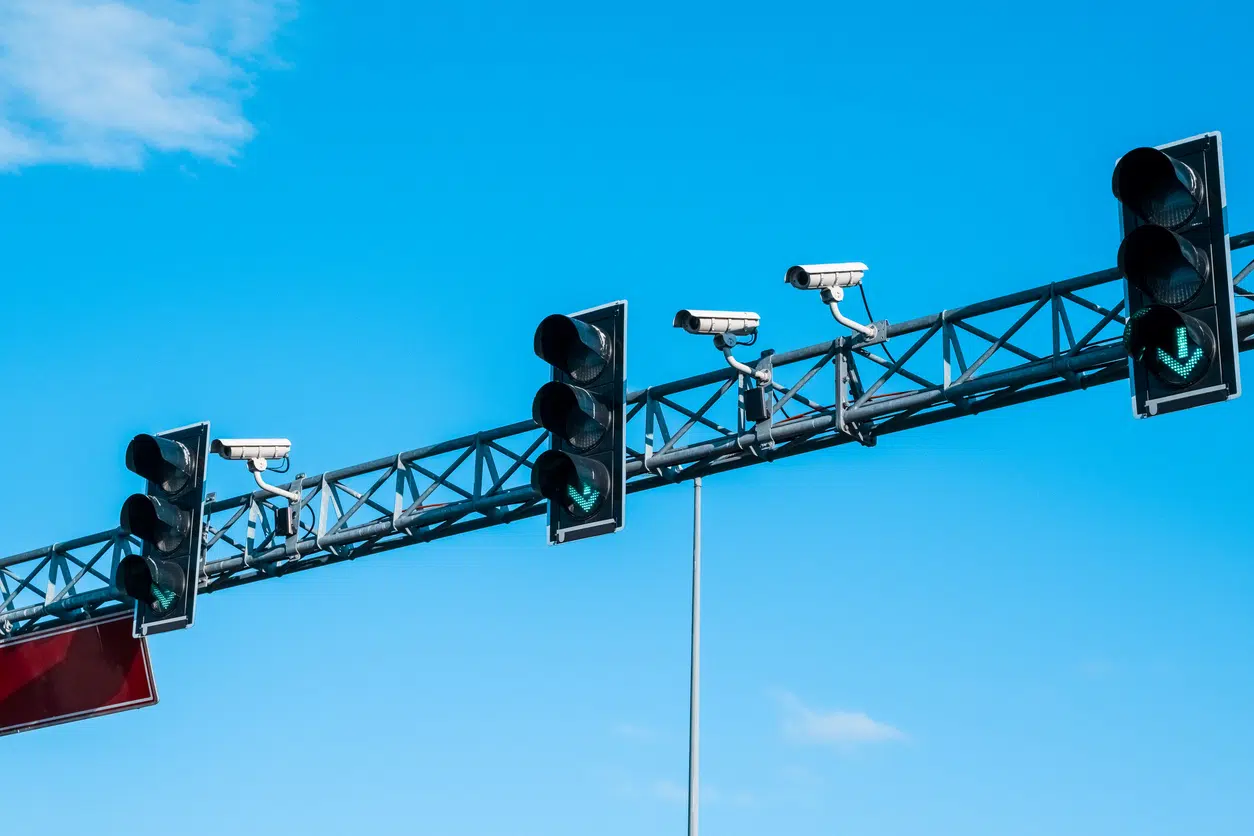
Executive Summary
Roadside traffic infrastructure is now mission‑critical, yet the communications layer that underpins it often remains a single point of failure. As ANPR, CCTV, radar and signal systems become increasingly connected, shared broadband and commodity cellular networks introduce systemic risk, where a single outage can disrupt multiple services simultaneously.
This paper examines how that risk has emerged, how regulatory expectations are evolving, and why resilient, independent connectivity architectures, built on multi‑network design and secure DualCore overlays, are now essential to maintaining operational continuity and protecting modern traffic management systems.
What this white paper covers:
Traffic management risk no longer ceases at the locked roadside cabinet as transport systems become more connected.
This white paper sets out what that means in practice, and how your approach to secure and resilient connectivity can help support your operations.
It includes:
- The increasingly connected road: how roadside ITS became networked operational technology, and why the connectivity layer is the gap that is often overlooked.
- The 2026 sector landscape: what Intertraffic, the Commercial Vehicle Show, Traffex and Parkex have revealed about current technology trajectories and their data dependence, together with current analyst market sizings.
- Regulation and threat: How UK NIS Regulations 2018, the Cyber Security and Resilience Bill, the NCSC Cyber Assessment Framework, affect ITS systems.
- The resilience and threat model: why segmentation alone does not remove a shared upstream dependency, and what a security resilience overlay is designed to change.
- How security overlays work: multi-network, DualCore failover across two physically separate operator cores, Private APN on both cores, end-to-end VPN, and rSIM® switching automatically at the SIM layer.
- The architecture, drawn: a full-page diagram of the overlay from roadside device to control centre and cloud.
- Deployment profiles and next steps: the retrofittable resilient rSIM route for individual networked devices, and the secure managed-router approach for sites that need local and WAN networking.
- A glossary of terms: plain-language definitions of every technical term and acronym used in the paper.
Who is it for?
Highway-authority and local-authority IT leads, ITS programme managers, traffic and network operations teams, and the integrators who design and maintain roadside estates.
The paper is written for mixed technical and commercial readers; the glossary therefore defines every term that is used.
Questions the paper answers:
- What does the 2026 season tell us about where traffic technology is heading, and what does all of it depend on?
- What will the Cyber Security and Resilience Bill and the NCSC Cyber Assessment Framework expect of in-scope operators and their suppliers?
- Why does network segmentation not necessarily remove a shared upstream dependency, and what does?
- How can resilience be added to devices already in the ground, without firmware changes or hardware modification, on compatible devices?
Why CSL?
CSL provides the managed, secure connectivity layer for critical IoT, with a Private APN + VPN infrastructure supporting over 3.5 million active connections. The principles long-proven in life-safety signalling (private connectivity, dual-path resilience, always-on monitoring) are the same ones the paper applies to ANPR, CCTV and signal-control backhaul in traffic systems.
Download the white paper
Resilient Connectivity for Traffic Management & ITS (PDF, 11 pages): the 2026 sector landscape, the regulatory and threat picture, the overlay architecture in a full-page diagram, deployment profiles for SIM and router estates, and a plain-language glossary.
Further reading:
- An introduction to the topic: The Connected Road is now Mission-Critical Infrastructure
- rSIM, the resilient DualCore SIM
- Resilient connectivity for UK policing
- Resilient connectivity for EV charging
- Warehousing and logistics
- eSIM, eUICC and iSIM standards (GSMA SGP.32): read the FAQ
Next steps
Start a consultative discussion about your roadside estate, or book a 30-minute architecture briefing with a CSL connectivity specialist.