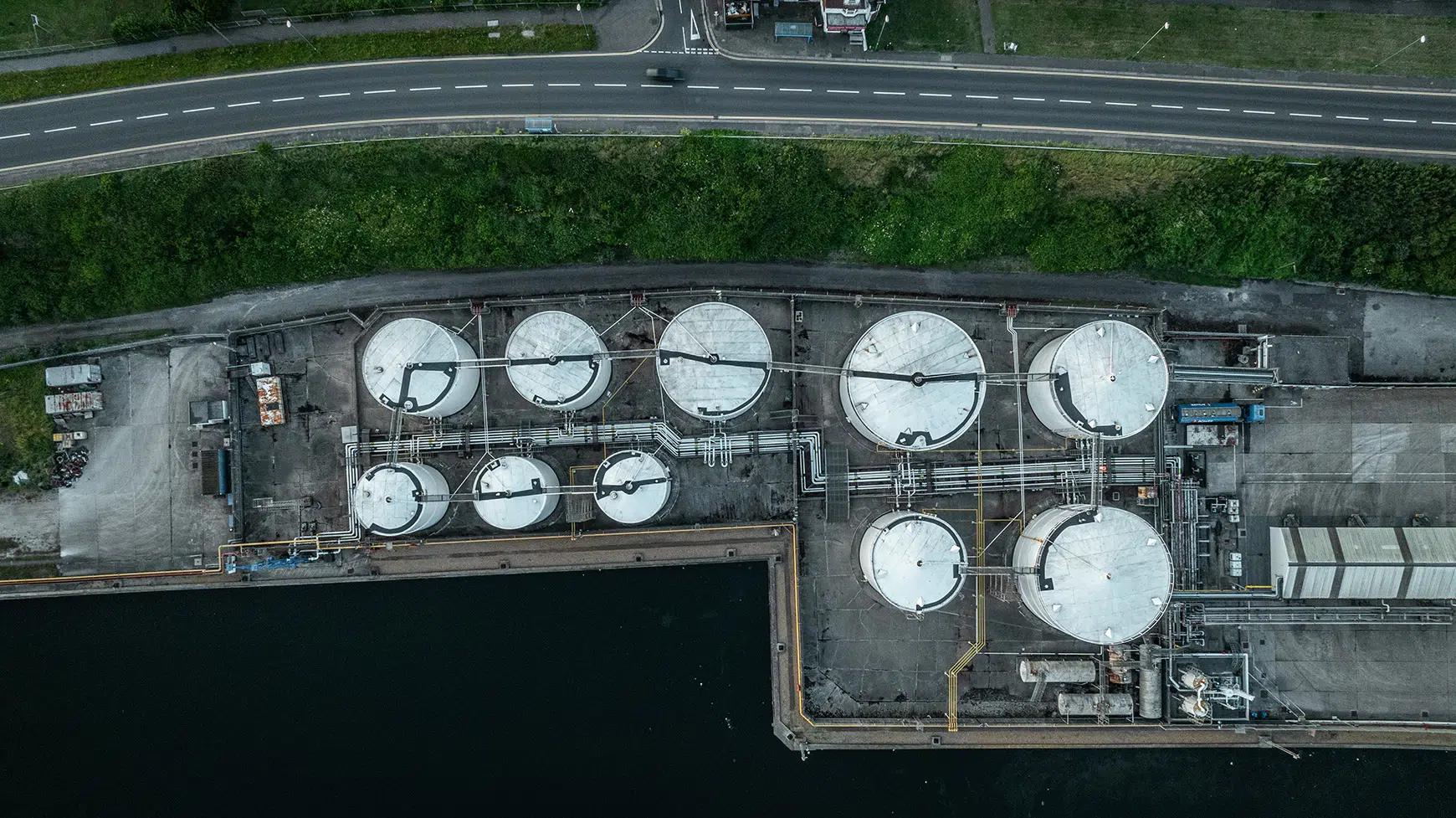
This article sets out where PSTN dependencies typically hide across gas infrastructure, why DSEAR/explosive-atmosphere constraints change the migration design, and what ‘safety-case-grade’ evidence looks like when replacing legacy lines with managed cellular/IP connectivity.
Why this belongs in the safety case
The UK’s PSTN withdrawal programme has a clear end-point, with the industry working towards completion by 31 January 2027. See:
In parallel, ‘stop sell’ measures have already restricted new analogue services in many scenarios.
- Openreach: stop sell briefing (GEN04623)
- BT Wholesale: stop sell notice (PDF)
For gas dutyholders, that timeline matters because communications reliability is part of the control strategy for a wide range of hazards. If a PSTN-dependent alarm path, emergency telephone, or SCADA link is withdrawn, it is not ‘a telecoms issue’ in isolation; it is a change to the reliability assumptions underpinning the safety case and associated Management of Change processes.

Where PSTN dependencies hide in gas networks
PSTN and ISDN lines remain embedded across a wide range of gas sites and functions, including:
- Above-ground installations (AGIs): pressure regulation telemetry, district governor monitoring, alarm circuits.
- Compressor stations and offtake sites: emergency telephones, lone-worker calling points, ESD confirmation paths.
- SCADA and process control: dial-up ‘fallback’ links for telemetry that were never migrated to IP.
- Third‑party and landlord lines: contractor-installed circuits supporting site systems that may not appear on the operator’s asset register.
The highest-risk lines are often the ones you do not know about. Un‑audited or ‘forgotten’ PSTN circuits are common at older installations, particularly where third parties provisioned services independently.

What a communications failure looks like in gas operations
In electricity networks, a communications failure often affects restoration speed. In gas networks, it can affect whether a hazardous condition is detected and acted upon at all. Three common failure modes are:
- A pressure reduction station loses its alarm signalling path. An abnormal pressure event occurs, but no alert reaches the control room.
- An emergency telephone at a remote AGI becomes unreachable. A lone worker cannot contact the control room during an incident.
- A gas detection or critical alarm system escalates via PSTN. The line is withdrawn and the detection still occurs, but the alarm chain is broken.
HSE guidance on the reliability of utility services emphasises assessing the loss of utilities (including communications) and identifying the hazardous events that could follow:

DSEAR and explosive-atmosphere constraints
Gas sites introduce constraints that many other sectors do not. Under DSEAR, dutyholders must assess fire and explosion risks, classify hazardous areas and control ignition sources:
Where equipment is installed in or near classified zones, the relevant equipment certification regime applies (commonly referred to as ‘ATEX’; in Great Britain this is implemented through the Equipment and Protective Systems Intended for Use in Potentially Explosive Atmospheres Regulations 2016):
Practically, this means a ‘like-for-like’ swap (placing a new communications device where the old PSTN socket was) may be unacceptable if the area is classified. Migration plans should explicitly document how equipment will be kept in non-hazardous areas, or how certified interfaces will be used where connections must enter classified zones.

Digital voice and power resilience: don’t create a new single point of failure
A key difference between analogue PSTN and digital voice is power dependency. Digital voice services typically rely on local power (for routers/ONTs and voice adapters), so dutyholders need to consider how emergency voice will work during a power interruption and what backup power arrangements are required for the safety function. See:
Where voice is used as an emergency control measure (e.g., lone-worker escalation or emergency help points), treat power backup and call-path testing as part of the safety case evidence, not as ‘nice-to-have’ telecoms features.
Why ‘multi-network’ claims need safety-case evidence
Many connectivity solutions describe themselves as ‘multi-network’ but often rely on roaming arrangements that have single points of failure or are not fully managed and monitored. Limitations including having a single IMSI, no autonomous switching, or being subject to network based steering preferences.
In a safety case context, the question is, therefore, not whether a SIM can attach to more than one network; it is whether the safety function can be maintained through credible failures (coverage loss, mast/backhaul outage, core issues, or SIM/network policy restrictions) and whether the operator can evidence that performance.
Where resilience is required, dutyholders should demand evidence: test results, monitoring/alerting, failover behaviour and times, and a clear description of remaining single points of failure.
CSL’s dual-core solutions, including the industry-leading rSIM (eUICC/SGP.32 aligned) are designed to autonomously switch between independent operator profiles. Combined with managed router infrastructure, they can support an evidencable resilience argument when integrated into a documented test and assurance regime: (see our services: CSL Routers; CSL rSIM).
A safety-case-driven migration approach
A pragmatic approach that aligns with safety case expectations is:
- Audit all PSTN-dependent safety, monitoring and voice systems, including third‑party and landlord-installed lines.
- Map each dependency to the safety function it supports and assess consequence of loss (including demand rate and escalation path).
- Assess DSEAR/explosive-atmosphere implications for any replacement equipment and document the installation design accordingly:
- Replace analogue lines with managed IP/cellular connectivity for monitoring, alarms and secure remote access where appropriate:
- Provide a resilient voice solution for emergency calling and lone-worker use cases where required (e.g., analogue-to-VoLTE bridging):
- Test alarm signalling and emergency voice under realistic fault conditions (power interruption, loss of primary network, degraded signal), record results, and update safety case evidence.

Regulatory context (UK)
Gas dutyholders operate within a layered regulatory framework. Gas transporters (‘gas conveyors’) have safety case duties under the Gas Safety (Management) Regulations:
Major accident hazard pipelines are regulated under the Pipelines Safety Regulations and associated HSE guidance, including requirements around emergency planning and procedures
COMAH applies to upper-tier installations handling dangerous substances
DSEAR requires employers to control risks from fire and explosion and to identify and classify hazardous areas
Each of these frameworks places obligations on the dutyholder to identify, assess, and control risks, and to keep safety case documentation current. PSTN cessation therefore represents a change to assumptions that underpin existing evidence, and should be managed accordingly:
Why act now
Waiting until late in the programme increases operational risk because legacy PSTN reliability is deteriorating. UK Government guidance reports that in 2024/25 there were over 2,600 major incidents on the PSTN (each affecting 500+ customers)
Ofcom has also reported an increase in significant PSTN resilience incidents in its Connected Nations reporting:
Final thought
For gas operators, PSTN cessation is not a connectivity upgrade; it is a safety case change. Every PSTN-dependent alarm, emergency telephone, and monitoring link that goes unaddressed represents a gap in the evidence that safety controls are working as intended.
Start with a dependency audit, map each line to its safety function, and build a migration plan that a safety case assessor would recognise as rigorous.
For more information, please contact us for a expert discussion of your problems and your key requirements.