

Modern policing is now data-led. From connected patrol vehicles and automatic number plate recognition (ANPR) to body-worn video (BWV) and drone operations, frontline officers and control rooms increasingly depend on reliable mobile broadband to access intelligence, share evidence, and coordinate response.
The scale of this shift is significant. The National Policing Digital Strategy 2025–2030, published by the NPCC and APCC, reports that UK policing spent approximately £1.8 billion on IT in 2024–25, rising to an estimated £2 billion in 2025–26. A substantial proportion of that spend is currently allocated to maintaining legacy on-premise infrastructure, underscoring the need for modern, resilient alternatives.
When connectivity drops (during a stop, a pursuit, a public order incident, or a search), critical workflows slow or fail: database checks cannot complete, live video becomes unusable, and situational awareness degrades. In a law enforcement context, that can directly affect officer safety and public protection.
Introduction
The UK’s transition toward mission-critical broadband through the Emergency Services Network (ESN) continues, but the programme’s timeline has been subject to well-documented delays and revisions. Forces need resilient connectivity today to support the operational devices already in service across diverse geographies and variable network conditions.
For example, research commissioned by Vodafone UK and conducted by WPI Strategy suggests that a national 5G Standalone network could save UK police up to 11 million hours annually: equivalent to freeing up approximately 5,400 full-time officers for frontline duties. Whether or not that specific projection is realised, the direction of travel is clear: the operational case for high-performance mobile broadband in policing is growing rapidly.
- Airwave remains the UK’s mission-critical radio service for police, fire and ambulance voice communications today. While mobile broadband will play an increasing role, radio continues to provide trusted push-to-talk capability and coverage characteristics that frontline teams rely on.
- ESN is being delivered in phases, so most services will operate in a hybrid environment for some time: mission-critical voice over radio alongside a growing set of data-hungry applications over mobile networks.
CSL does not replace mission-critical radio voice services. Instead, CSL strengthens the resilience and security of operational data connectivity by using multi-network approaches, secure routing, and managed assurance so critical devices and applications keep working when a single network underperforms. This article focuses specifically on that data connectivity layer: the broadband link that supports BWV, ANPR, database access, drones, and the growing range of field technologies that sit alongside, rather than replace, voice radio.
This article outlines the key policing use cases that depend on cellular connectivity, the requirements those use cases demand, and how a multi-network, secure approach can reduce single points of failure.
Use Cases: Where Connectivity Failure Creates Risk
The range of connected devices deployed across UK police forces has expanded dramatically in recent years. While radio communications remain vital for voice, the data-intensive applications that now define frontline policing require broadband cellular connectivity.
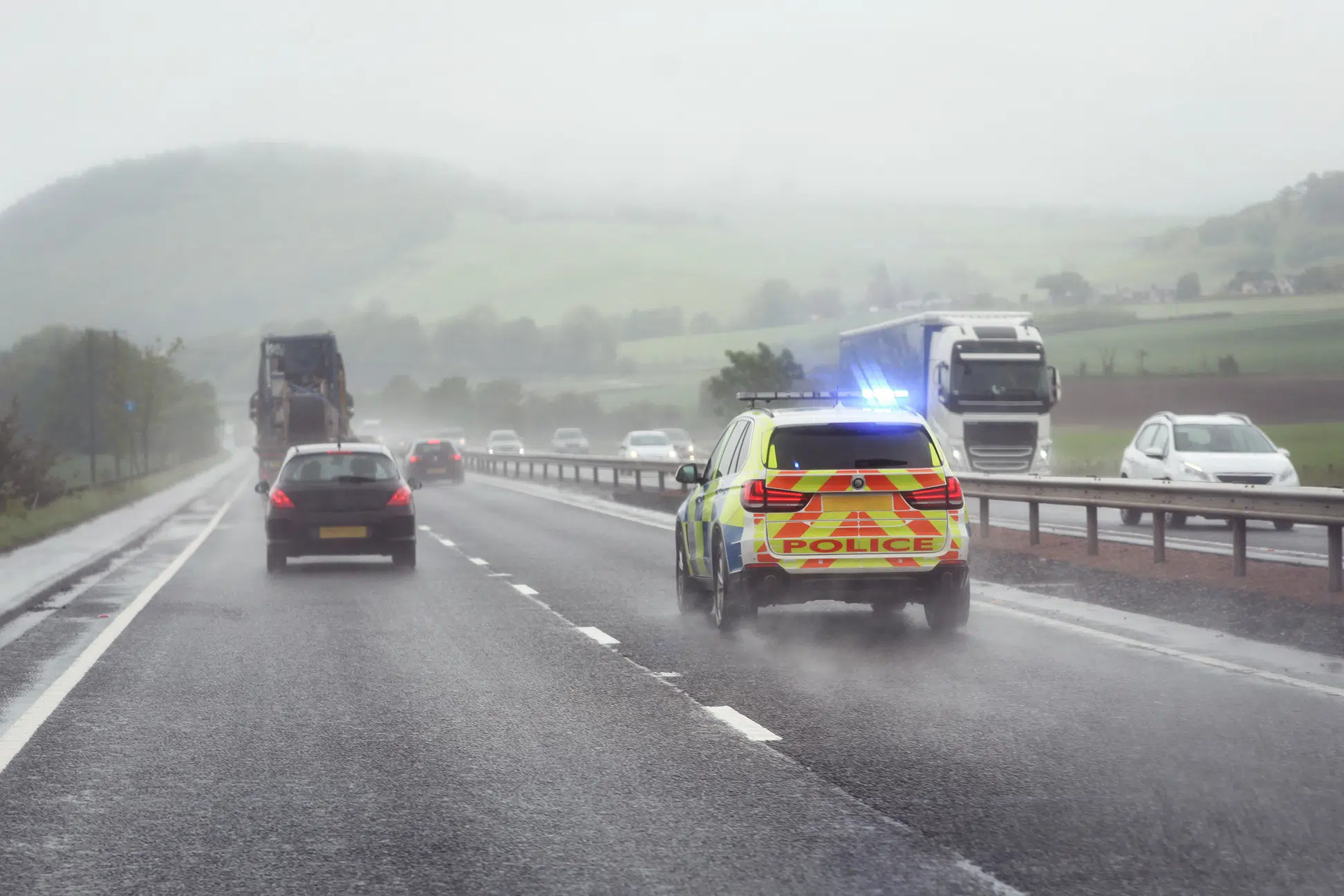
Connected Police Vehicles
A modern police car is far more than a mode of transport. It is a mobile data terminal, a communications hub, and an evidence-gathering platform. Officers routinely access:
- Police National Computer (PNC)
- Police National Database (PND)
- Local force intelligence systems for real-time checks on individuals, vehicles, and addresses
They also:
- File electronic witness statements
- Receive tasking updates from force control rooms
- Upload incident data directly from the field
Vehicle-mounted cellular routers provide the broadband backbone for these functions, supporting:
- In-vehicle ANPR cameras
- Dashcam footage upload
- Wi-Fi hotspots that connect officers’ tablets and laptops to force networks while on patrol
The critical challenge is that police vehicles operate across vast and varied geographies. A patrol might begin in a dense urban centre with strong multi-operator coverage, traverse suburban areas where one network outperforms another, and end in a rural location where only a single operator provides usable signal.
If the vehicle’s router is locked to a single mobile network operator (MNO), any coverage gap can mean a loss of connectivity, and with it the officer’s access to intelligence, communications, and backup.
Cellular is the only practical bearer for this use case. While officer’s’ tablets and laptops often connect to an in-vehicle hotspot, that hotspot itself depends on a cellular uplink to reach force systems. The alternative backhaul options are limited: Satellite connectivity introduces latency and cost that make it impractical for routine operational use. Private radio networks lack the bandwidth required for video, database queries, and evidence upload. Cellular provides the combination of mobility, coverage, bandwidth, and security that vehicle-based policing demands.

Body-Worn Video (BWV)
Body-worn cameras are now widely deployed across UK police forces. They serve a dual purpose: protecting officers against false complaints and securing high-quality video evidence that strengthens prosecutions. Forces typically require footage integrity, secure chain of custody, and timely upload to digital evidence management systems.
While many BWV devices store footage locally for later upload via docking stations, forces are increasingly moving toward real-time or near-real-time streaming. Live video feeds from officers attending a firearms incident, a public order event, or a high-risk warrant allow gold and silver commanders to make tactical decisions based on what is actually happening at the scene, rather than relying solely on radio commentary.
Live BWV streaming demands consistent uplink bandwidth and low latency. A connection that buffers, drops, or introduces significant delay undermines the operational value of the technology.
When an officer’s safety may depend on a commander seeing what they see in real time, connectivity is not a convenience; it is a lifeline.
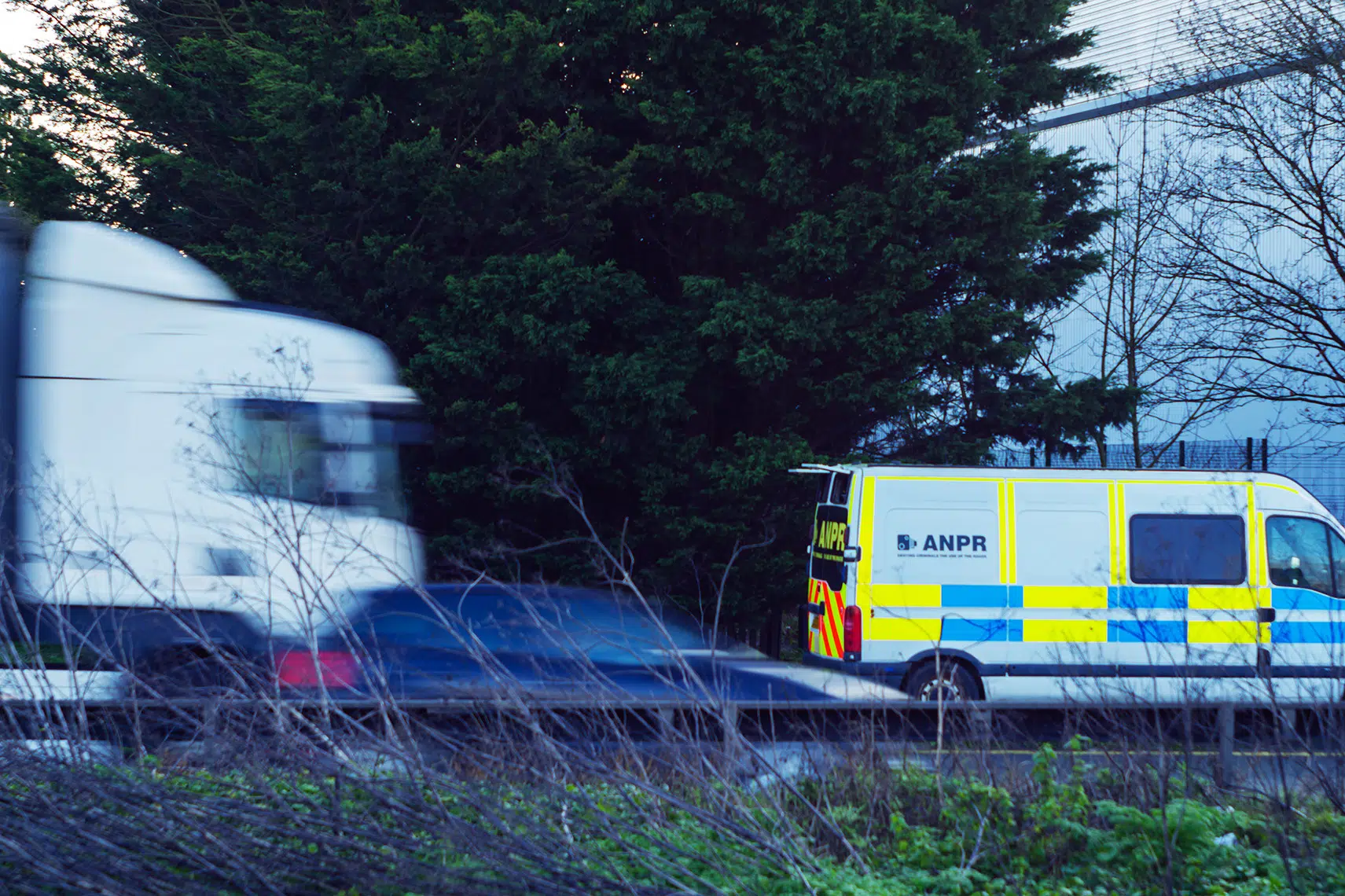
Automatic Number Plate Recognition (ANPR)
ANPR is one of the most data-intensive and time-critical applications in UK policing. The national ANPR infrastructure, managed by the National ANPR Service (NAS), cross-references captured plates against databases including:
- Databases of stolen vehicles
- Databases of uninsured drivers
- Records for wanted persons
- Vehicles linked to organised crime
For mobile ANPR units (cameras mounted on police vehicles that scan plates as the vehicle patrols), cellular connectivity is the primary means of querying central databases in real time. When a “hit” is returned, the officer has a narrow window to make a decision: pursue, stop, or relay the sighting to colleagues.
Any delay caused by a dropped connection or network congestion directly impacts the force’s ability to intercept. Fixed ANPR installations at strategic road points, motorway junctions, and force boundaries also rely on cellular backhaul where fixed-line connectivity is unavailable or impractical to install, generating continuous streams of plate data that must be transmitted securely and reliably to central ANPR infrastructure.

Remotely Piloted Aircraft Systems (Drones)
UK police forces are rapidly expanding their use of drones to support:
- Search and rescue and missing person operations
- Crime scene survey
- Public order monitoring
- Pursuit support
While the drone itself typically communicates with its operator via a direct radio link, the ground control station relies on cellular connectivity to relay live video feeds to force control rooms, specialist units, and multi-agency coordination centres.
In large-scale search operations covering rural terrain, the cellular connection at the ground station may be the only viable link between the search team and the wider operation.
Beyond visual line of sight (BVLOS) drone operations, an emerging capability for applications such as motorway incident management, will place even greater demands on cellular infrastructure as the link between aircraft, operator, and command becomes entirely network-dependent.
Mobile Policing, Biometrics, and Surveillance
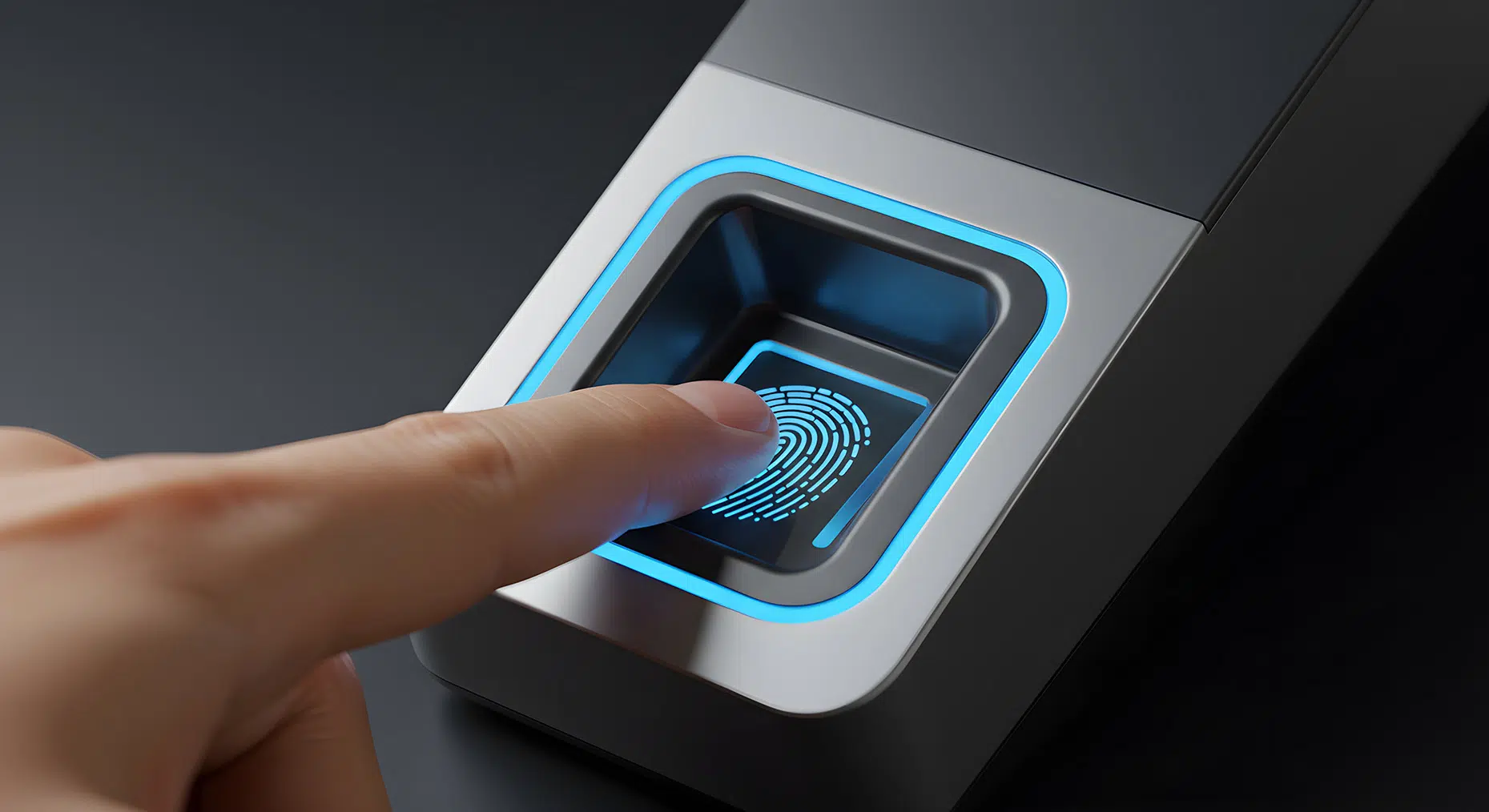
Beyond vehicles, cameras, and drones, a growing range of field technologies also depend on cellular connectivity. Mobile biometric devices query national fingerprint and identity databases in real time, enabling officers to confirm or rule out a match at the scene rather than returning to the station. Roadside interview tablets, electronic custody processing, and mobile ID checks all rely on the same underlying broadband link.
Temporary and covert surveillance presents a distinct challenge. Equipment deployed for county lines investigations, counter-terrorism operations, or targeted surveillance of serious and organised crime is often placed in rural areas, industrial estates, or locations with unpredictable coverage. A surveillance camera that loses its cellular link becomes a recording device with no real-time operational value, and physically retrieving footage may compromise the operation itself. In these scenarios, connectivity must be both resilient and discreet.

Connectivity Requirements for UK Operational Policing
The use cases above share a set of common connectivity requirements. These are not aspirational targets; they are operational necessities.
Multi-Network Resilience
No single mobile network provides complete, uninterrupted coverage across the UK. Urban environments suffer from congestion and interference; rural areas have well-documented coverage gaps; and even major networks experience localised outages. For mission-critical law enforcement applications, dependence on a single MNO introduces a material single point of failure.
Resilient connectivity requires the ability to access multiple mobile networks and to switch between them automatically when the primary connection degrades. This is not simply a matter of convenience; it is a matter of officer safety and operational effectiveness.
End-to-End Security
Law enforcement data is among the most sensitive information transmitted over any network. PNC and PND queries, ANPR hits, biometric data, BWV footage, and operational intelligence all require protection against interception, tampering, and unauthorised access. Data handling requirements are governed by the Data Protection Act 2018 (including Part 3 for law enforcement processing) and force-specific information security policies.
Connectivity solutions must provide encrypted, policy-controlled pathways that minimise exposure to the public internet. In practice, this means private APNs, encrypted VPN overlays, and infrastructure assessed against relevant security standards.
Bandwidth and Low Latency
Applications such as live video streaming, real-time database queries, and drone video relay require both adequate bandwidth and minimal latency. An ANPR hit that arrives late, or a BWV stream that freezes during a critical interaction, can have serious operational and safety consequences.
The growing adoption of HD and 4K video, combined with the increasing number of connected devices per officer and per vehicle, means that bandwidth demands will only continue to rise. Connectivity solutions must deliver high throughput consistently, not just under ideal conditions.
Rapid Deployment and Operational Flexibility
Law enforcement operations are inherently unpredictable. A major incident, a pre-planned operation, or a mutual aid deployment may require connectivity to be provisioned, relocated, or scaled at short notice. SIM-based solutions that can be remotely configured, activated, and managed without physical intervention provide the flexibility that policing demands.
This is particularly important for temporary deployments such as surveillance operations, event policing, and cross-border collaboration, where equipment may be moved between locations and force areas with minimal notice.
The requirements above describe what law enforcement needs from connectivity. The question is which provider can deliver against all of them simultaneously, at scale, and with the resilience that mission-critical operations demand.
How CSL Group Delivers Resilient Connectivity for Law Enforcement
CSL Group has spent over two decades building connectivity infrastructure purpose-designed for mission-critical applications. With over 3.5 million active connections and direct VPN integration to hundreds of Alarm Receiving Centres (ARCs) across Europe, CSL’s infrastructure already underpins life-safety services across telecare, fire and security, healthcare, and emergency services. That operational scale and maturity is directly relevant to law enforcement.
For law enforcement, CSL’s approach addresses every requirement outlined above through a combination of proven technology, private infrastructure, and operational resilience.
At a Glance: Single-MNO/MVNO vs. CSL DUAL-CORE:
| Requirement | Single Core -MNO/MVNO Approach | CSL DUAL-CORE Approach |
| Network resilience | Single point of failure; or coverage gaps cause total loss of connectivity | Dual bearers with automatic failover across multiple UK MNOs |
| Security | Standard APN; data may traverse the public internet | Private APN + encrypted VPN overlay, integrated with hundreds of ARCs across the UK and Europe |
| SIM management | Physical SIM swap required for network changes; fleet-wide updates are labour-intensive | rSIM (aligned with GSMA SGP.32) enables simple to deploy dual-core resilience, over-the-air profile switching and fleet-wide remote management |
| Operational visibility | Limited device-level insight; reactive fault resolution | 24/7 monitoring with proactive fault management and device-level reporting |
| Mission-critical pedigree | General-purpose connectivity; not designed for life-safety | 3.5M+ connections across telecare, fire & security, healthcare, and emergency services |
Multi-Network Resilience with DUAL-CORE Technology
CSL’s DUAL-CORE technology provides access to multiple UK mobile networks via dual bearers, with automatic network selection and failover designed to maintain session continuity where possible.
Compared with approaches that depend on a single primary network, DUAL-CORE provides genuine multi-network redundancy at the SIM level. It supports both vehicle-mounted routers and fixed-installation assets using the same underlying technology.
For a police vehicle patrolling from an urban centre into a rural area, this means the router transitions between networks as signal conditions change, without manual intervention or SIM swapping. For a temporary ANPR installation at a remote motorway junction, it means the camera can access whichever network provides the strongest service at that specific location. In practice, the device continuously evaluates available networks and selects the best-performing connection in real time; so an officer moving between coverage areas experiences no interruption to database access, live video, or communications. The result is a connectivity layer that adapts to the operational environment rather than constraining it. With rSIMs dual-core approach, devices or routers can switch dynamically if core networks degrade or suffer outages. The SIM itself detecting drops in throughput and switching radio networks and cores without losing the end-to-end security essential for this service.
Future-Proof Flexibility with rSIM
CSL’s rSIM (resilient dual-core SIM) technology, aligned with the GSMA’s SGP.32 IoT eSIM standard, enables remote provisioning and management of SIM profiles without physical access to the device. Network profiles can be switched, updated, or reconfigured over the air, giving forces the ability to adapt their connectivity strategy as network conditions, operational requirements, or commercial agreements change.
For large-scale fleet deployments (where a force may have hundreds or thousands of connected vehicles, cameras, and devices), once deployed, rSIM eliminates the logistical burden and operational downtime associated with physical SIM replacement. It also provides a technology pathway that protects investment against future network evolution, including the ongoing migration to 5G standalone architectures.
Secure Connectivity via Private APN and Encrypted VPN
CSL provides direct VPN integration to Alarm Receiving Centres (ARCs) across the UK and Europe, using private APN and encrypted VPN overlay with policy controls and continuous monitoring. This same secure connectivity architecture extends to law enforcement applications, ensuring that PNC queries, ANPR data, BWV footage, and operational intelligence are carried over encrypted, policy-controlled pathways (private APN + VPN overlay) with reduced exposure to the public internet.
This approach was originally developed and proven in the telecare and fire and security sectors, where CSL’s connectivity links critical devices to the ARCs and monitoring centres that protect lives and property. The same rigorous approach to security, redundancy, and uptime applies directly to law enforcement use cases.
Proactive Monitoring and Managed Connectivity
CSL provides 24/7 network monitoring and proactive fault management across its connectivity estate. For law enforcement customers, this means connectivity issues are identified and addressed before they impact frontline operations. CSL’s management platform provides forces with full visibility of their connected estate, including real-time status, data usage, signal quality, and network selection across every device.
This level of operational oversight is essential for forces managing large, geographically dispersed fleets of connected assets, ensuring that a camera deployed for a surveillance operation, a router installed in a response vehicle, or a BWV device issued to a frontline officer is connected, secure, and performing as required.
With over 3.5 million active connections and direct VPN integration to ARCs at high-scale, CSL’s operational scale means that resilience is not a promise—it is a track record.
Enterprise Readiness and Public Sector Assurance
CSL’s connectivity services are designed to meet the governance and assurance expectations of public sector organisations. Forces benefit from structured onboarding and rollout processes, dedicated account management, and clearly defined service level commitments.
The CSL management platform provides comprehensive audit trails, SIM lifecycle controls, and asset-level reporting that supports both day-to-day operations and formal governance requirements.
For forces evaluating connectivity partners, CSL’s track record of supporting regulated, life-safety sectors provides a level of operational assurance that general-purpose MNO or MVNO offerings typically cannot match. CSL’s connectivity already underpins critical operations in telecare (where connectivity failures can directly affect vulnerable people), fire and security (where alarm signals must reach monitoring centres without interruption), and healthcare. The operational disciplines, security architecture, and uptime expectations in these sectors are directly analogous to those in law enforcement, and CSL’s infrastructure is designed to meet them.

A Reference Architecture for Resilient Policing Connectivity
The transition from legacy radio systems to broadband-enabled policing is an operational necessity. As forces adopt new technologies and connect more devices, the question is not whether they need resilient cellular connectivity, but whether their current provider can deliver the reliability, security, and resilience that mission-critical operations demand.
CSL Group brings a distinctive combination of capabilities to this challenge. Multi-network resilience through DUAL-CORE technology eliminates single-network and single-core failure dependency. rSIM provides dual-core for any device – with future-proof flexibility and remote management at scale. Private APN and encrypted VPN connectivity delivers the high-security architecture that law enforcement data demands.
CSL provides over two decades of experience in mission-critical connectivity, protecting lives through telecare, safeguarding properties through fire and security, and enabling vital health services, means that CSL understands what “always-on” really means when the stakes are highest.
When an officer’s safety depends on a connection that does not fail, when an ANPR hit must reach the patrol car without delay, when a commander needs a live video feed from a critical incident, that is when the resilience of the underlying connectivity is truly tested.
CSL’s infrastructure is built for exactly those moments.
Next steps
If you’re planning for resilient operational data connectivity across police, fire, or ambulance services, here are three practical ways to engage with CSL:
- Book a meeting or review: we’ll help map your fleet’s multi-network and core network coverage across your operational area and identify single-network exposure in your current connected estate
- Request a demo of CSL’s dual-core, monitoring and managed connectivity approaches
- Discuss a transition-ready design that complements Airwave voice while supporting ESN-era broadband requirements
To arrange any of the above, contact us to get in touch with our team.