Introduction
Hospitals do not operate one flat network. They operate on multiple governed domains: clinical IT, connected medical devices, estates and life-safety systems, third-party on-site services, and an extended estate beyond the hospital wall: including ambulances, satellite sites, GP surgeries, and patients’ homes.
Each has different owners, regulators, and failure consequences. The domains, however, can share one upstream WAN path, so one outage can reach all of them at once.
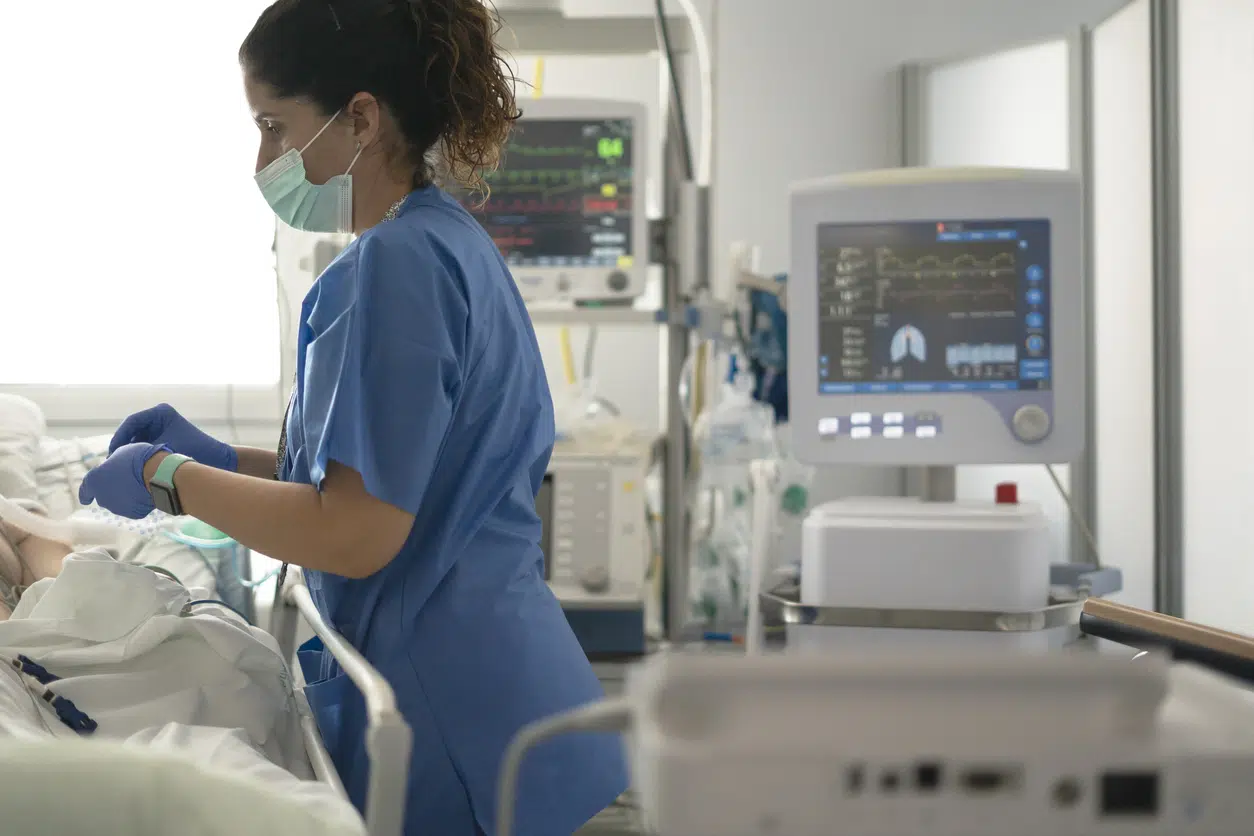
When that path fails, a failure of clinical IT is generally visible to its users. A medical device, however, may keep working locally while an alarm it sends over the shared WAN does not arrive, and unless delivery is supervised, nothing may show that the alarm was lost.
“A medical device may keep working locally during a WAN outage while an alarm or telemetry workflow that depends on the shared WAN stops.”
What's Inside
A 27-page architecture paper, version 4.2, covering:
- The multi-domain model: why hospitals should be understood as multiple governed domains, not one flat network, and why upstream dependency should be documented, assessed, and governed like any other clinical risk.
- Domain-by-domain analysis: clinical IT and connected medical devices; estates, lift alarms and building systems; third-party services; and the extended estate beyond the hospital wall.
- The architecture gap: where alarm, telemetry, and life-safety systems inherit a shared WAN path by default, and what a documented separation looks like in practice.
- The frameworks to check: how DSPT/CAF, CQC Regulation 12, DCB0129/0160, MHRA post-market surveillance and DTAC apply to connectivity architecture decisions, and what “documented risk acceptance” means operationally.
- NHS incident context: Publicly documented outages, and why the pattern extends beyond cyber events to functional availability at the point of care.
- Planning model: a model in Appendix B that a Trust completes with its own figures, to size the exposure of a cardiac monitoring fleet that shares one upstream WAN path.
- Implementation pathways: rSIM®, the CSL Router range, CSL Outpost, VoiceLink and CSL Signal Analyser 2, with CSL’s alarm signalling products and services, mapped to clinical, estates and extended-estate deployment scenarios.

Who Should Read This
- CIOs and CCIOs: who need to document upstream dependencies across domains they may not directly manage.
- Chief Security Officers: who need to assess whether ransomware compromise of the Trust network would also stop clinical alarms reaching the people who respond.
- Clinical engineering leads: who need independent paths for connected medical devices, telemetry, and infusion systems.
- Estates and facilities teams: who own lift alarms, building management and medical gas systems, which can share the Trust WAN without documented governance.
- Procurement leads: who need a clear view of current NHS and public-sector framework routes for managed connectivity.
- ICB and board-level stakeholders: who need a clear, defensible architecture position before the next CQC inspection or DSPT submission.
Three Pillars:
- Multiple domains: Clinical IT, medical devices, estates, third-party, and extended estate: each with different owners, regulators, and failure consequences.
- One shared dependency: Hospital domains can inherit the Trust WAN by default. That shared upstream path is a documentable, assessable risk.
- A resilient design response: Where the risk is unacceptable, separation is a design choice, not a wholesale network replacement. CSL DualCore® architecture provides an independent path for a clinical alarm pathway without replacing the ward LAN or Wi-Fi.