Quick Answer
Distributed estates often combine different access technologies, site hardware, power arrangements and support models. Resilience therefore depends on more than adding connections. It requires a repeatable architecture. Teams need to map shared dependencies, match protection to operational criticality, monitor service quality and work to a consistent framework for deploying, managing and recovering connectivity across diverse locations.
Why distributed estates need architecture, not just connections
Organisations increasingly depend on connectivity across portfolios of retail stores, healthcare locations, smart buildings, utility assets, logistics depots and industrial facilities. Each site may look independent, yet many rely on the same cloud platforms, security services, connectivity policies and operational teams.
The result is an estate-wide service problem. A local access fault may affect one location, while a central authentication, cloud or configuration issue can affect many sites at once. Organisations therefore need to design connectivity for geographically distributed operations as a repeatable service architecture rather than as a collection of individual connections.

Start with operational outcomes
Resilience requirements should follow the operational consequence of lost or degraded connectivity. A payment terminal, building management controller, environmental sensor and personal alarm may all use cellular or broadband access, but the effect of interruption is different in each case.
Before selecting a connection or router, work through the following questions:
- The business function: what process stops or becomes less effective when connectivity is unavailable?
- The tolerance: how much interruption or degradation can the application absorb?
- The local capability: can the site continue operating locally while its external connection is unavailable?
- The recovery behaviour: do sessions recover automatically, or is application or user intervention required?
- The operational response: who detects the issue, investigates it and decides whether an engineer visit is necessary?
This classification allows investment to follow operational exposure. It also avoids applying the same architecture to every site, regardless of its function.

Standardise the site, not every connection
Geography, building type and access availability can make complete technical uniformity unrealistic. The stronger objective for complex operations is to standardise the parts that can be repeated: the approved device family, configuration, private networking, security policy, monitoring, installation practice, power provision and escalation process.
A common site pattern can include:
- Approved gateways and routers: selected according to the site’s performance, environmental and resilience requirements.
- Consistent security controls: private APNs, VPN policies, device identity and managed access appropriate to the application.
- Repeatable power arrangements: documented supply, backup power where required and an understood maintenance regime.
- Central inventory and configuration: clear ownership of hardware, firmware, SIM profiles, software and changes.
- Defined support routes: monitoring, remote diagnosis and escalation designed for locations with limited local technical support.
CSL’s IoT Router range supports single-path and multi-path estate designs, so the site architecture can be matched to operational need while retaining a common managed approach.
CSL’s managed connectivity addresses specific layers within this end-to-end service architecture. Multi-network cellular can provide diversity across available radio networks at the access layer. Mobile profiles provisioned through independent operator cores can provide diversity at the operator-core layer. Private APN and VPN policies can provide controlled routing, network separation and protection for data in transit. Local power sits below that scope, and the security, identity and application platforms sit above it. Each needs protection designed for it.
Design diversity across the communications pathway
A backup connection is useful only when it remains available during the event affecting the primary service. The required diversity may involve access technology, physical route, mobile operator core, device, power source, provider or application platform. Different layers of the architecture protect against different failure domains, so these dimensions should be assessed together rather than in isolation.
A layered design may combine:
- Primary access: fixed broadband, fibre or cellular connectivity sized for normal operations.
- Alternative access: a cellular, fixed or satellite path with sufficient separation from the primary service for the relevant risk.
-
Mobile network and core resilience: multi-network connectivity can extend available radio coverage, while profiles provisioned through independent operator cores can reduce dependence on a single core-network infrastructure.
-
Broader multi-link diversity: bonded or managed combinations of mobile, fixed, wireless and satellite access where the risk assessment identifies a need for diversity across more than one access path.
CSL rSIM® provides a route to operator-core diversity within the mobile connectivity layer. rSIM monitors connectivity and can autonomously switch between configured mobile profiles. Where the two mobile service profiles use independent operator cores, this provides DualCore® resilience: a dedicated layer of protection against faults affecting one core-network path.
CSL IoT Routers can manage alternative mobile connectivity paths. Where those paths use services provisioned through independent operator cores, the resulting design can provide protection against radio-network unavailability and faults affecting one core-network path. Where equipment, local access or physical-path diversity is also required, this can be complemented by additional connectivity and power measures.
Where wider multi-link diversity is required, CSL Outpost can combine multiple mobile modules with fixed, wireless or satellite connections as part of a managed architecture.
Map independent and shared-dependency events
Two connections can appear diverse while still depending on the same component. Dependency mapping should extend from the endpoint to the application, including local infrastructure, access, transport, operator core, security services and cloud platforms.
| Layer | More localised event | Shared-dependency event |
| Site and power | Loss of power, a damaged cable or equipment failure at one location | A shared upstream supply, centrally managed configuration or repeated equipment issue affecting multiple locations |
| Access | A local fixed-line fault | Shared ducting, backhaul aggregation or limited local radio coverage |
| Operator and core | A fault affecting one mobile service path | A common subscriber platform, operator core, control-plane or interconnect dependency |
| Security and name resolution | A configuration error on one device | A central VPN concentrator, firewall, DNS or authentication service |
| Application | A single endpoint software issue | A shared cloud platform, API, database or regional service |
Note: These examples are illustrative. Dependencies vary by architecture, geography, service design and customer environments. Mapping them shows which dependencies diversity can remove, which require an operational response and which remain as accepted risks.
The effect of a dependency becomes clearer when the same service architecture is considered under two different fault conditions. Figure 2 compares a fault affecting one access path with a fault in a shared component on which both paths depend. Access diversity addresses the first. The second needs protection at the layer where the fault resides.
Observe service degradation, not just outages
Connectivity-state monitoring provides an important view of link availability and path changes, but a distributed estate may also require visibility across the wider service. A link can remain registered while latency, packet loss, signal quality or application performance deteriorates. Equally, available access paths do not necessarily confirm that a cloud application, private network or authentication service is usable.
Useful estate telemetry can include:
- Connectivity state: registration, reachability, active path and session status.
- Service quality: latency, packet loss, throughput and relevant radio indicators.
- Path changes: failover events, selected profiles and return-to-primary behaviour.
- Application evidence: transaction tests or service checks that reflect the actual operational journey.
- Asset condition: configuration, firmware, data use and power state where the equipment supports it.
The monitoring design should also define ownership. Data has limited operational value unless someone is responsible for interpreting it and initiating the appropriate response.
Treat power as part of the connectivity service
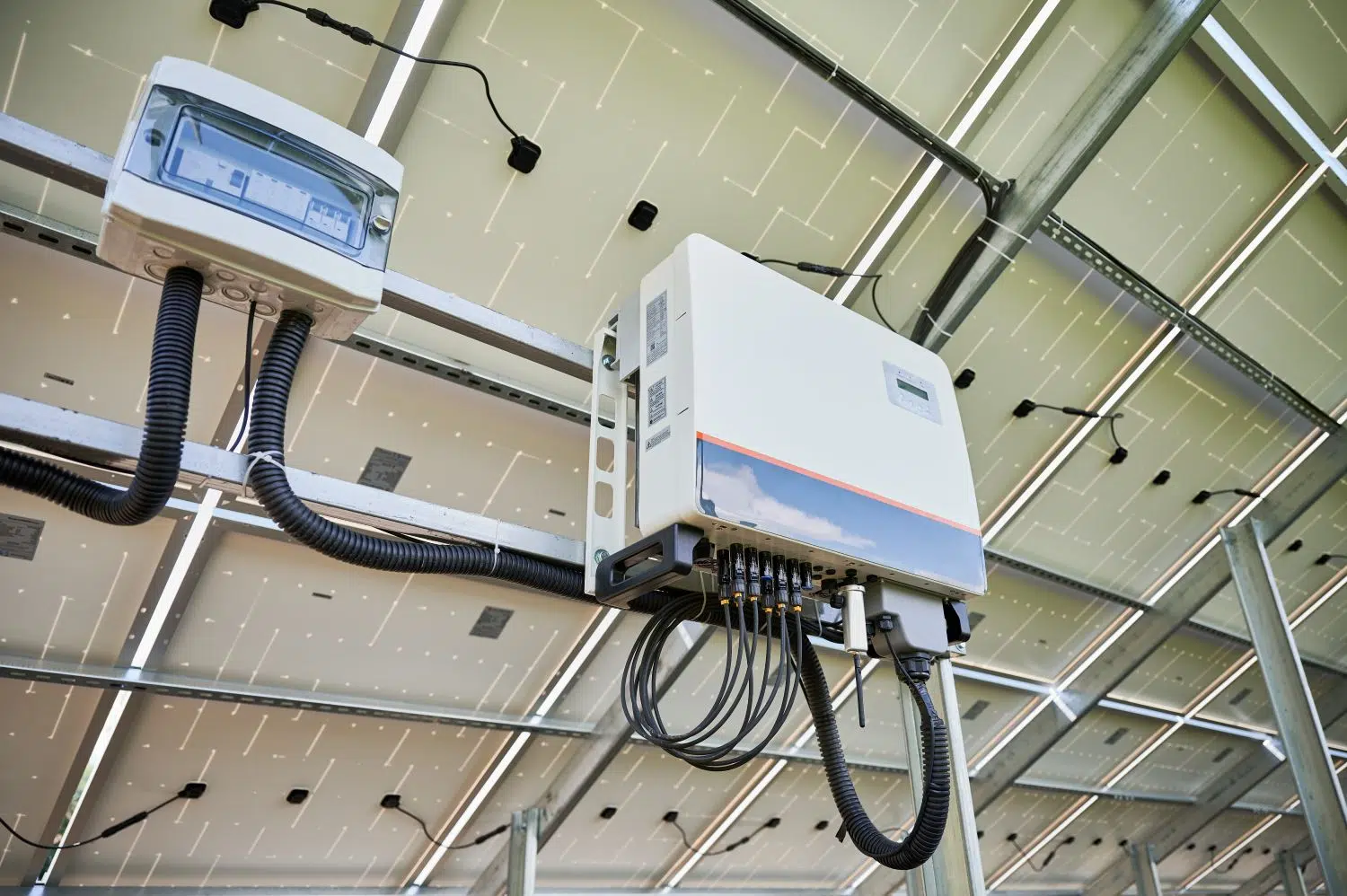
Routers, gateways, switches and endpoints depend on local electrical supply. Adding multiple network paths will not protect a site if the equipment serving those paths loses power. Backup power should therefore be designed around the real load, required operating period, battery condition, temperature and maintenance regime.
Power resilience should also be tested as an end-to-end condition. A local UPS may keep customer equipment operating while an access network, site cabinet or upstream service is affected by the same wider power event. The site documentation should record that dependency, including which upstream services the UPS does not protect.
Six controls for scalable resilience
A practical distributed-estate assessment can be organised around six controls:
- Classify criticality. Set the required service level from operational impact rather than device type alone.
- Map dependencies. Identify shared components from local power and hardware through to security and applications.
- Select diversity. Choose the access, operator-core, physical-path and provider separation needed to address the material risks.
- Standardise deployment. Use repeatable equipment, configuration, installation and support patterns across the estate.
- Observe the service. Monitor link condition, path changes and the application journey, with defined operational ownership.
- Test and improve. Exercise failover, backup power and recovery procedures, record the result and update the design when dependencies change.
The six controls provide a consistent decision-making framework while allowing the resulting architecture to reflect each site’s operational needs and risks.

From site resilience to estate continuity
As estates grow, teams need to look beyond individual sites to the dependencies those sites share.
- Standardisation reduces configuration drift, simplifies lifecycle management and makes service behaviour easier to compare.
- Dependency mapping shows where apparent redundancy still relies on common infrastructure.
- Observability and testing show whether the architecture behaves as designed.
CSL’s Geo-Critical solutions bring together managed cellular connectivity, private networking, routers and multi-link options for distributed estates. For a deeper examination of independent and correlated connectivity risks, read Building IoT Resilience: Why Multi-Network and Multi-Link Connectivity (and Satellite) Are Non-Negotiable.
Review the resilience of your distributed estate
Identify shared dependencies, assess whether your connectivity pathways provide meaningful diversity and understand where additional protection could strengthen operational continuity across the estate. CSL can help you assess how site equipment and access-path dependencies interact with operator-core connectivity, private networking, monitoring and managed support.
Frequently asked questions
What is distributed-estate connectivity?
It is the connectivity architecture, management and support used across multiple geographically separated sites or assets that depend on common operational systems and policies.
Does a cellular backup guarantee resilience?
No. A cellular backup can provide an alternative access path, but no single connection guarantees resilience. CSL can provide diversity across relevant connectivity layers: multi-network services can extend available radio coverage, rSIM can switch between profiles provisioned through independent operator cores, and CSL Outpost can combine mobile, fixed, wireless and satellite paths where broader diversity is required. Local power, site equipment, security services and application platforms remain separate dependencies and need protection appropriate to their role.
How does rSIM support resilience?
rSIM monitors connectivity and can switch autonomously between configured mobile profiles without relying on device firmware logic. Where those profiles are provisioned through independent operator cores, it provides a dedicated layer of mobile-core resilience. It can form part of a wider architecture that also addresses equipment, access-path and power dependencies.
What should estate connectivity monitoring include?
It should include link and session state, service quality, failover events, configuration condition and, where practical, an application-level check that reflects the real operational service.