
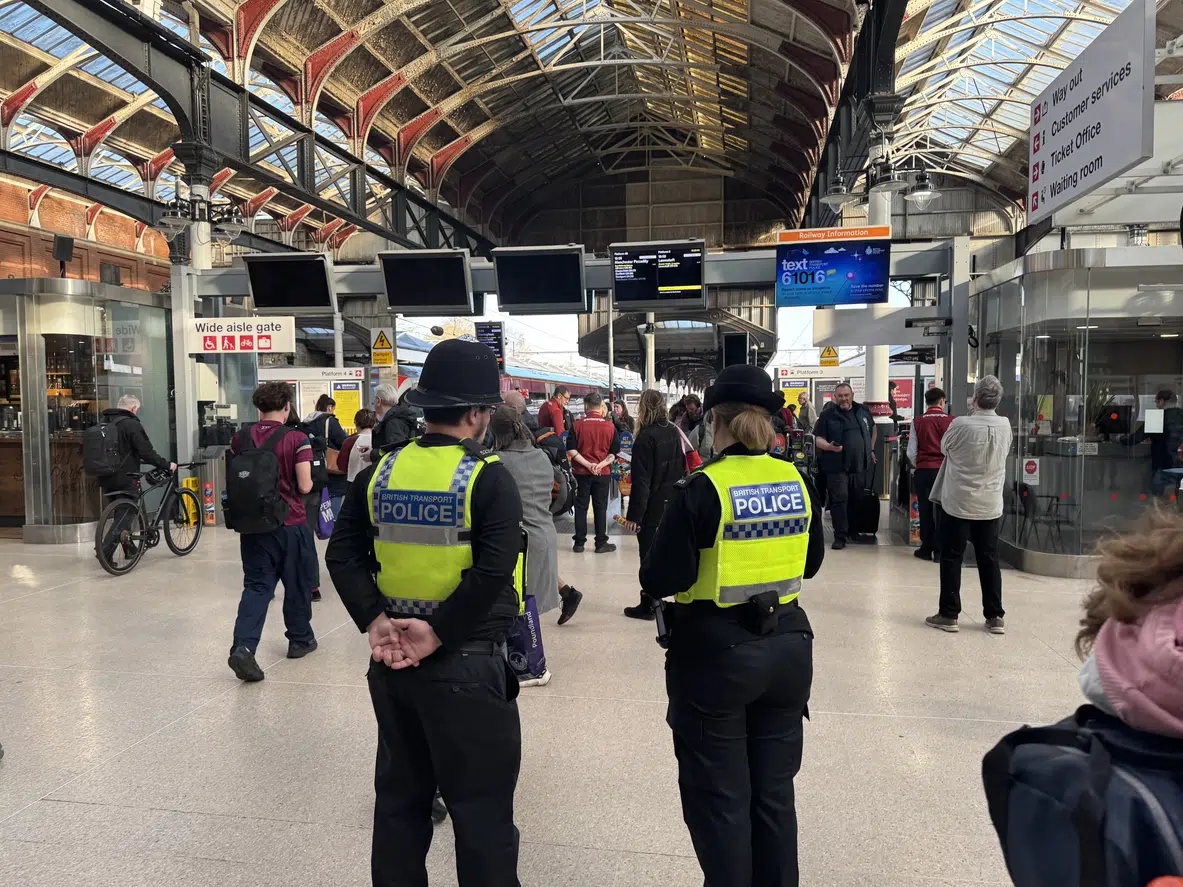
Introduction
The Emergency Services Mobile Communications Programme (ESMCP) was formed by the Home Office in 2011 to find a replacement for Airwave, the TETRA-based radio network used by every police force, fire service, and ambulance trust in England, Scotland, and Wales[1]. After consulting industry and testing the market, consensus settled on a 4G commercial network solution. Major supplier contracts were awarded in 2015: A UK mobile network operator would provide the mobile infrastructure, and a second contractor would deliver the user services platform[2]. Emergency services were expected to begin using ESN by September 2017, with Airwave fully decommissioned by December 2019[3].
That timeline collapsed almost immediately. Resets in 2018 and 2019 pushed the Airwave shutdown to 2022, then to 2026[4]. According to the Home Office’s August 2024 Accounting Officer Memorandum, the current planning basis requires users to be fully transitioned to ESN, including an approximately two-year migration period, by 2029[1]. Whether that target holds remains uncertain, and some reporting in early 2026 suggested the transition could extend beyond the current planning basis.
Why replace Airwave?
To understand why ESN matters, it helps to understand what it is replacing. Airwave is a private, dedicated radio network built on TETRA (Terrestrial Trunked Radio) technology. It operates on its own infrastructure, entirely separate from any commercial mobile network. It provides push-to-talk group voice communications, the kind where an officer presses a button and instantly talks to every unit in their group with no call setup delay. It also supports short data messages and limited status signalling. By most operational accounts, it is extremely reliable for what it does: it covers over 99% of Great Britain’s geography and has averaged 99.86% availability[3].
The case for replacing it rests on three problems.
First, Airwave’s data capabilities are severely limited, comparable to dial-up or ISDN speeds. It can carry voice and short text, but it cannot support images, video, live mapping, database lookups, or the data-rich applications that modern policing, firefighting, and paramedicine increasingly depend on.
Second, it is expensive: the National Audit Office reported costs of approximately £1,300 per device per year[2], significantly more than what a modern commercial network-based solution should cost.
Third, it is a monopoly. The Airwave network is owned by the same company that held the original ESN user services contract, and the Competition and Markets Authority found that this monopoly position allowed the operator to charge excess prices, with emergency services unable to switch to a competing provider[7]. A point that has been challenged by the network owner [7a].
ESN was designed to solve all three problems at once. Rather than operating a dedicated private network, emergency services would use a commercial 4G (and eventually 5G) network, but with a dedicated core providing priority access over commercial traffic. Instead of TETRA handsets, frontline staff would carry ruggedised smartphones running a mission-critical push-to-talk application that emulates Airwave’s instant group voice capability while also providing broadband data: video from body-worn cameras, live access to criminal records databases, real-time location sharing, building plans, and medical records. The vision is fundamentally sound. The difficulty is that Airwave’s simplicity is also its strength. TETRA was purpose-built for this job, and push-to-talk works instantly because it is baked into the radio standard. Replicating that as an application layer on a commercial LTE network, which was designed for consumer broadband rather than mission-critical voice, has proved technically far harder than anticipated.
The cost of delay
The financial picture is stark. By March 2023, the Home Office had spent just under £2 billion directly on ESN without delivering a functioning replacement for Airwave, according to the National Audit Office[3]. A further £2.9 billion had gone to maintaining Airwave during the extended delay[3]. The programme’s estimated lifetime cost reached £11 billion as of June 2021, a figure the Home Office acknowledged would increase[4]. Running Airwave beyond that point is projected to cost at least £250 million per year[3].
Emergency services have borne significant costs of their own. Police forces estimate spending £125 million on interim Airwave devices since 2018, with a further £25 million projected by 2026. The fire service reported £6 million on transition preparation and £2 million on early ESN equipment that became obsolete before use. Ambulance service transitional costs reached £9.5 million[6]. Much of this expenditure will deliver no lasting value once ESN eventually arrives.
What went wrong
The ESN’s problems have been structural, commercial, and technical in roughly equal measure.
The commercial dynamics were particularly damaging. The Airwave operator’s ownership of the legacy network, combined with its role as a key ESN supplier, created what the Public Accounts Committee described as weak incentives to complete the ESN[4]. The CMA investigated and estimated the operator’s potential excess profits from Airwave at approximately £1.3 billion over the period 2020 to 2029, absent a price control[7]. To avoid being forced to sell Airwave, the incumbent supplier exited the ESN programme, with the Home Office paying £45 million to settle the separation in December 2022[3].
Technically, the coverage gap between Airwave and the mobile commercial network proved harder to close than expected. At the programme’s outset, the MNO’s 4G network reached just 70% of the UK’s landmass for ESN purposes[2]. Nearly 300 additional sites were planned, but persistent rural and remote gaps prompted the UK Space Agency, acting on behalf of ESMCP, to issue a request for information in early 2026 inviting satellite operators including SpaceX’s Starlink to explore how direct-to-device technology might supplement terrestrial coverage[8][9].
The supplier base has since been substantially rebuilt. In December 2024, BT Group signed a new mobile services contract valued at £1.29 billion over seven years according to its published announcement[10] (the procurement notice frames the total potential value at up to £1.85 billion excluding VAT)[11]. In January 2025, IBM was awarded the user services contract, valued at £1.362 billion excluding VAT, replacing the original contractor as the lead systems integrator[12]. CGI was separately appointed as a technology delivery partner[13]. But in important respects, the programme is having to rebuild core components.
The impact on emergency service providers
For the 108 police forces, fire services, and ambulance trusts that run the UK’s emergency response, the ESN’s delays have created a prolonged and uncomfortable limbo.
Frontline staff continue to rely on Airwave handsets whose data capabilities are limited to narrowband speeds. They cannot routinely share images, video, or real-time data feeds in the field without workarounds. The police lead for ESN told a Public Accounts Committee hearing that the delays had “severely dented” the emergency services’ confidence in the programme’s deliverability[14]. Fire services reported reduced willingness to mobilise resources for a transition whose timeline keeps shifting[14]. Some forces have begun developing their own interim data solutions. This is pragmatic in the short term, but it creates a fragmentation risk that could complicate the eventual ESN migration[14].
There is also a growing technology-gap risk. Current Airwave hardware is expected to reach obsolescence around 2028. If ESN is not ready, emergency services may face yet another round of investment in equipment with no long-term future[6].
The resilience question, meanwhile, extends beyond ESN itself. The systems that sit alongside frontline communications, including alarms, remote patient monitoring, lone worker devices, CCTV, alarm signalling, and vehicle telematics, all depend on mobile connectivity that works without interruption. And mobile networks, even advanced ones, do fail: for example; a nationwide carrier outage in Australia in November 2023 left 2,145 people unable to reach emergency services[15], and a major carrier outage in Canada in July 2022 disrupted connectivity for over 12 million users including emergency services[17].
While emergency services wait for ESN, the connected systems they depend on today need resilience strategies that can be deployed now, not in 2029.
Where CSL’s rSIM fits in
CSL has spent over 30 years providing connectivity for fire and security signalling, emergency service communications, telecare, and healthcare. These are sectors where a dropped connection can mean a missed emergency alarm or a failed patient alert. The company manages connectivity for more than 3.5 million devices in safety-critical environments.
CSL’s rSIM technology is designed to reduce the single-network dependency the ESN project has exposed. The rSIM stores two independent mobile operator profiles on a single SIM card and monitors network health at the hardware level, checking real connectivity, not just network attachment, at configurable intervals. This distinction matters because standard roaming SIMs often remain attached to a network that appears available but is no longer passing data, leaving devices stranded with a signal but no working connection. If rSIM detects a genuine connectivity failure, it switches autonomously to the backup operator’s core network. No manual intervention or device firmware changes are required[19].
The architecture is worth understanding in the ESN context. Most multi-network SIM solutions, including standard roaming and multi-IMSI SIMs, connect devices to multiple radio access networks but still route all traffic through a single operator core. If that core fails, every device goes down simultaneously, regardless of how many radio networks are technically available. This is precisely the failure pattern seen in the major outages cited above.
rSIM addresses it differently. Each of its two operator profiles connects through a separate core infrastructure with independent, geo-redundant routing. This gives the device two layers of resilience: single or multi-RAN roaming across available radio networks at the first layer, and, if the core network itself fails, failover to an entirely separate core pathway at the second. In an environment where a single network now carries both commercial traffic and ESN priority services, and where 2G and 3G sunsetting is driving more devices onto 4G and 5G infrastructure, that kind of core-level path diversity is increasingly relevant for the connected systems that sit around frontline operations. Because rSIM operates at the SIM level rather than in device firmware, it can be deployed into the existing installed base of single-SIM devices without re-engineering, a practical consideration for organisations managing thousands of already-deployed body-cameras, press to talk solutions, alarm panels, or lone worker devices.
For public-sector, police and emergency-service deployments, data routing and jurisdiction can also become important design considerations. Organisations may need to consider where signalling and user data transit, and whether network architectures align with their legal, regulatory, and procurement requirements. rSIM’s architecture supports flexible profile configurations, including options where both operator cores are domiciled within the same jurisdiction.
A Parallel Case Example:
rSIM’s resilience and CSL’s connectivity underpins technology-enabled care systems for elderly and vulnerable people across Europe[20]. Deployment partners in that sector have reported that rSIM’s autonomous profile switching has reduced the risks associated with short and medium-term connectivity disruptions that can delay emergency calls/alerts. For instance, in an MNO core network outage incident in February 2026, CSL’s rSIM deployments kept vulnerable users connected for a two hour period between midnight and 02:00 am when other single core systems had failed. This resulted in hundreds of essential calls being completed, that would not have done so, had the technology not been in place.
For emergency service providers navigating the prolonged ESN transition, that kind of resilience has immediate practical value. It does not replace ESN, and it does not replicate Airwave’s push-to-talk functionality. But for the connected systems that surround frontline operations, including bodycams, mobile ruggedised tablets, vehicle control systems, ANPR, mobile CCTV, alarms, voice calls and lone worker devices, rSIM offers a tested, deployable layer of network resilience that works today, on existing devices, without complex integration.
The broader lesson
The ESN programme confirms what practitioners across critical communications have long understood: migrating life-critical services onto commercial cellular networks is technically sound but operationally unforgiving. The engineering is hard, the commercial dynamics are complex, and the tolerance for failure is exceptionally low.
The demand for reliable, always-on connectivity has not paused to wait for ESN. The PSTN switch-off and 2G/3G sunsets are accelerating regardless. Every organisation in the critical connectivity chain, from emergency services to telecare providers to local authorities, needs assurance that the systems protecting life and safety will remain online when it matters most. In a landscape where ESN’s delivery timeline remains uncertain, that assurance cannot be deferred.