
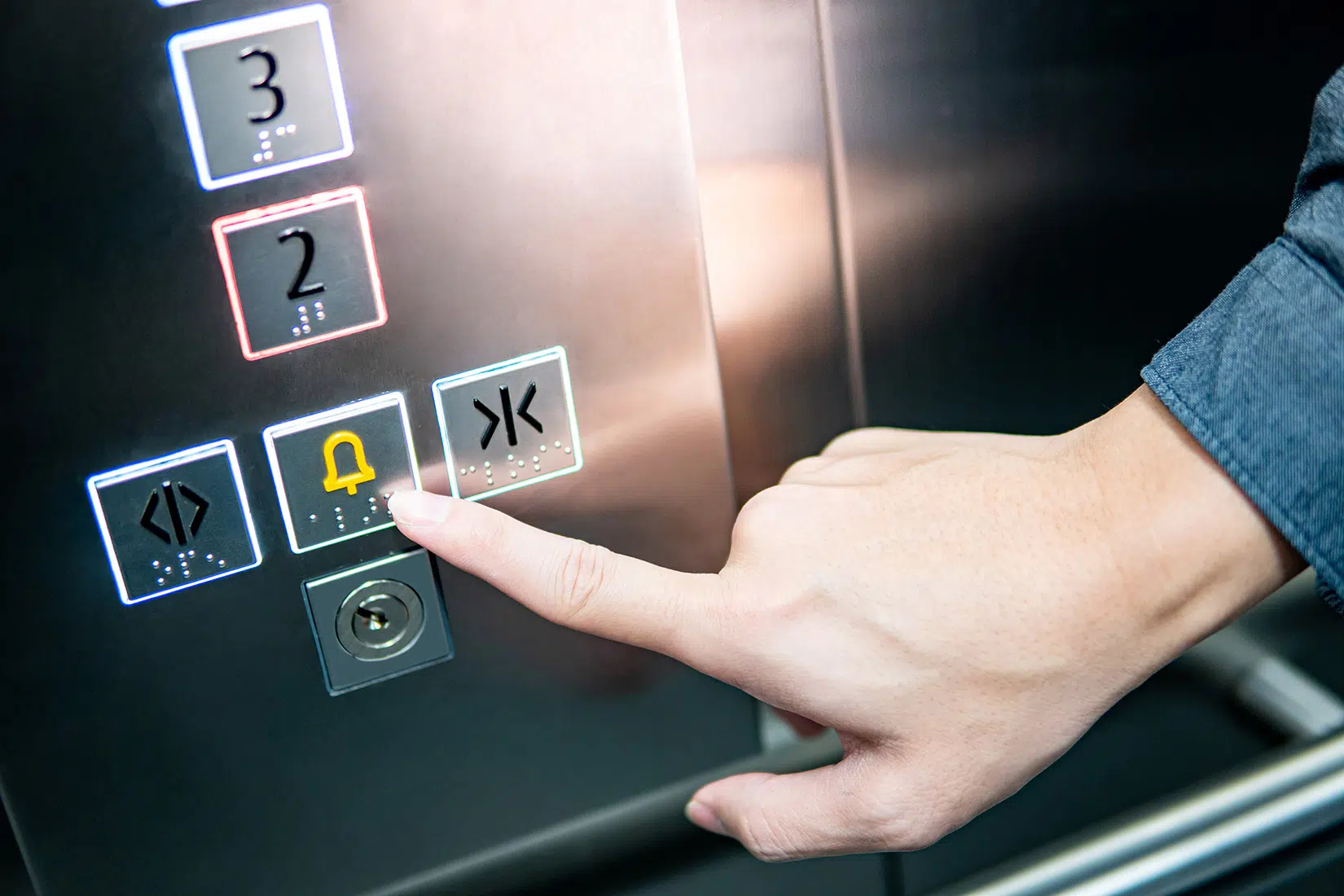
For Housing Associations, NHS Trusts, courts and local authorities, that is not an IT nuisance – it’s a life-safety and compliance risk that lands squarely in the estates and building safety portfolio.
This article looks at what the PSTN switch-off means for lift call alarms, the standards and legislation you are responsible for, and why the timeline is tighter than it looks.
Where we really are on the PSTN switch-off
The headlines have been confusing, so it’s worth resetting the picture:
- The UK’s legacy copper-based Public Switched Telephone Network (PSTN) and WLR services are being retired in favour of all-digital IP and mobile networks.
- The original “big bang” switch-off date of December 2025 has been pushed back to 31 January 2027 after incidents where telecare devices failed following bulk migration.
- Government’s Telecare National Action Plan (which applies to England) and related guidance are explicit: the digital switchover is essential because the analogue network is becoming increasingly unreliable – but vulnerable users must be protected during the transition.
For estates teams, two points matter:
- This is already happening. Stop-sell policies on analogue/WLR lines, local exchange migrations and IP voice rollouts mean your lines may migrate long before 2027.
- The delay is not a holiday. Telcos and industry bodies are still advising organisations to work towards late 2025 as a sensible internal deadline, leaving contingency for complex cases.
If you’re only now starting to think about lift alarms, you’re competing for the same scarce installer and engineering capacity as every other estate with critical alarms, telecare and fire systems to migrate.
How lift call alarms work - and why PSTN matters
Most passenger lifts installed in the last few decades include an emergency autodialler or call alarm:
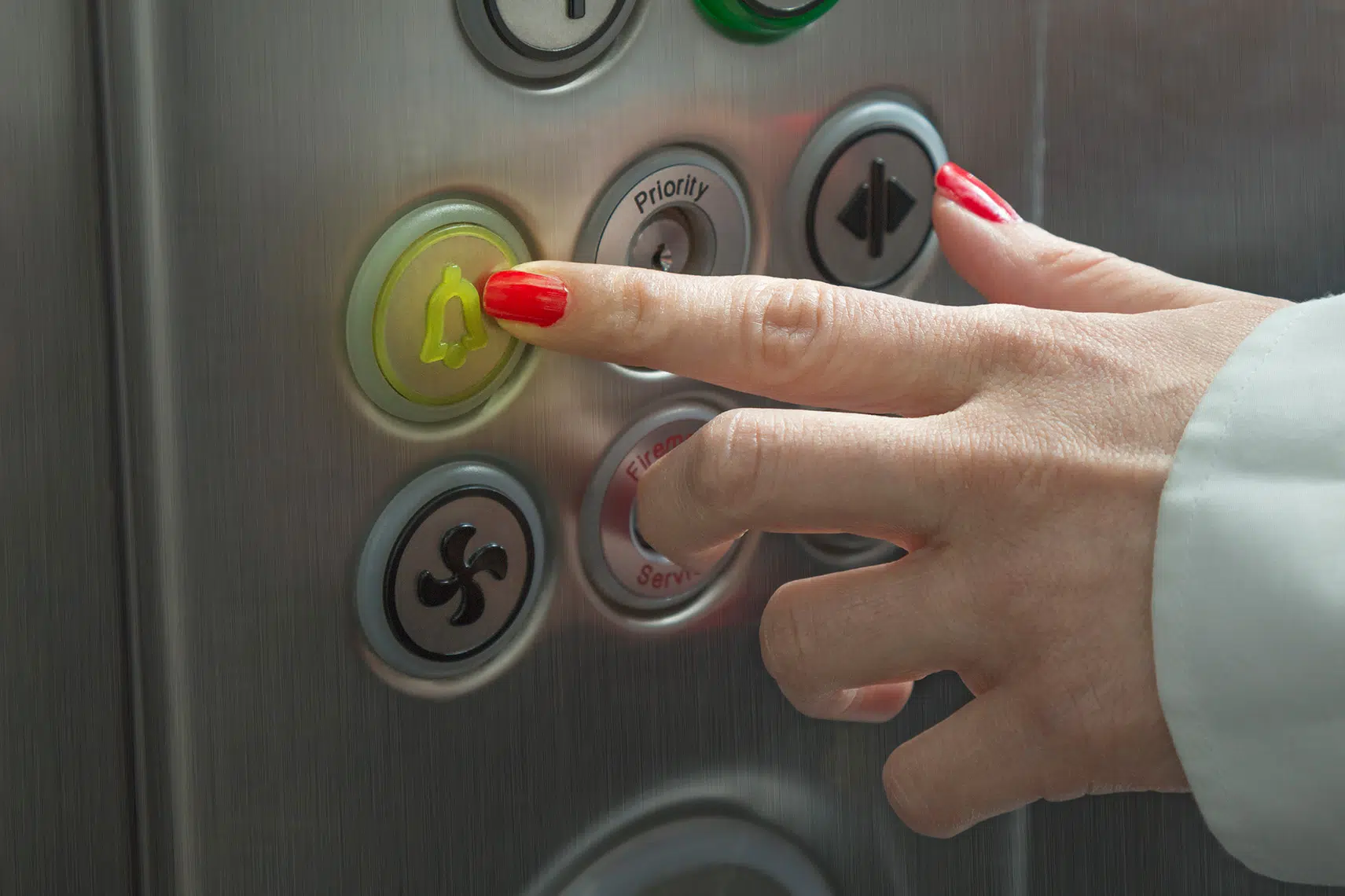
- A passenger presses the alarm button.
- The lift alarm unit automatically dials a pre-configured number.
- A two-way speech link is opened to an alarm receiving centre (ARC), security control room or on-call engineer.
- The ARC can identify the specific lift/location and dispatch rescue.
European/UK standards, particularly BS EN 81-28, set out how this has to work: one press should initiate the alarm, passengers must be able to speak to a responder, the system must send identifying data, and the alarm process should not be interruptible by the trapped person.
Historically, almost all of this relied on a plain old telephone service (POTS) analogue line – cheap, ubiquitous, and powered from the exchange, so it usually survived a building power cut.
With the digital switchover:
- That copper line may be replaced by VoIP over broadband (via a router and ATA adaptor).
- Or disconnected entirely, leaving the autodialler with no working path.
- Or left on an increasingly unreliable analogue service as the network ages.
Typical failure modes when lifts are migrated “as just another phone line” include:
- No power in a fire or power cut – the router and ATA die, so the lift alarm cannot call out.
- Codec / DTMF issues – the call connects, but the alarm signalling tones or data packets are mangled or delayed by VoIP, so the ARC can’t identify the lift correctly.
- Latency and jitter – two-way speech is garbled or breaks up, breaching the requirement for clear communication.
- Shared routers – i.e. a “cheap and cheerful” solution where the lift alarm shares a router with office phones; someone reconfigures or replaces the router without realising they’ve just disconnected the lift alarm.
On paper, EN 81-28:2022 is agnostic about whether you use PSTN, IP or cellular – it sets performance requirements for activation, transmission, testing and maintenance of the alarm system. But it explicitly excludes external network failure from its scope, which means the way you design the end-to-end communication path (and its resilience) becomes a building safety responsibility, not just an external and unrelated “telco thing”.
Your legal and standards landscape
For estate managers, the PSTN switch-off collides with a web of legislation and standards. The key ones for lift call alarms are:
3.1 Core health and safety law
- Health and Safety at Work etc. Act 1974 – imposes a general duty on employers and those in control of premises (including councils, NHS trusts and housing providers) to ensure, so far as is reasonably practicable, the health and safety of employees and others.
- Management of Health and Safety at Work Regulations – require risk assessments and suitable control measures, which clearly encompass the risk of passengers being trapped in lifts without a working alarm path.
If you knowingly leave critical alarms on an infrastructure that you have been told is being withdrawn, it becomes increasingly hard to argue you’ve taken “reasonably practicable” measures.
3.2 Lift-specific regulations and standards
- LOLER 1998 – Lifting Operations and Lifting Equipment Regulations
Passenger lifts used at work must be safe, properly maintained and thoroughly examined (usually at six-monthly intervals), with defects affecting safe operation remedied promptly. HSE guidance on passenger lifts and escalators highlights LOLER and related duties.
- BS EN 81-28:2022 – Remote alarm on passenger and goods passenger lifts
The current European standard sets detailed technical requirements for lift alarm systems, including activation, transmission, information for use and maintenance, and site testing. As of February 2025 (in force from 21 February 2025), recent updates require that three-day automatic test calls must use the same method as actual emergency calls, and both the autodialler and any associated communication device (such as a GSM gateway or IP terminal) require monitored battery backup.
- Fire Safety (England) Regulations 2022
For high-rise residential buildings (18 metres or 7+ storeys), responsible persons must undertake monthly routine checks of lifts for use by firefighters, evacuation lifts and essential firefighting equipment. Any fault that cannot be rectified within 24 hours must be reported electronically to the local fire and rescue authority.
Important: These reporting requirements apply specifically to firefighting and evacuation lifts, not to ordinary passenger lifts. However, best practice suggests extending similar testing discipline to all critical lifts even where not legally mandated.
- Building Safety Act 2022 – For higher-risk buildings, accountable persons must demonstrate proactive management of building safety risks through Building Safety Cases. Lift emergency communication that depends on withdrawn infrastructure is clearly a gap that regulators will expect you to address.
What happens if you do nothing
The consequences of inaction range from operational disruption to serious safety and compliance failures:
- Silent failure – Your lift alarms may simply stop working when your exchange migrates, with no warning. You won’t know until someone is trapped and discovers the alarm doesn’t connect.
- Regulatory breach – LOLER thorough examinations may identify non-functional alarms as defects requiring immediate remedy. Fire Safety Regulations require working firefighting lifts in high-rise buildings.
- Duty of care failures – Courts, hospitals and councils owe duties to vulnerable users (patients, detainees, disabled visitors). A lift entrapment without communication poses obvious risks to these groups.
- Reputational and legal exposure – An incident involving a trapped passenger where the alarm failed would attract immediate scrutiny from HSE, CQC, Ofsted, housing regulators or coroners, depending on your sector.
- Building Safety Case gaps – For high-rise residential, failure to demonstrate you’ve addressed known risks (like PSTN dependency) weakens your safety case and could result in enforcement action.

A practical five-step plan
Here’s how to approach this systematically:
Step 1 – Map your estate
Create or update a complete register of all lifts, including:
- Lift type (passenger, goods, platform, firefighting, evacuation)
- Current alarm communication method (PSTN line, mobile, IP, none)
- Line provider and account details
- Alarm receiving centre (ARC) details
- Last test date and result
Contact your telco to confirm which lines are analogue/WLR and when they’re scheduled for migration.
Step 2 – Risk-rank your lifts
Not all lifts are equal. Prioritise based on:
- Criticality – Firefighting/evacuation lifts in high-rise buildings, lifts serving vulnerable populations (hospitals, care homes, custody), sole access for disabled users.
- Usage – High-traffic lifts vs occasional-use service lifts.
- Migration timeline – If your exchange is migrating before 2027, those lifts jump to the top of the list.
Step 3 – Choose your technical solution
A key point: you don’t necessarily need to replace your lift control equipment:
For many estates, the most cost-effective approach is to use a dedicated adapter or gateway device that sits between your existing lift alarm autodialler and the modern network. These devices:
- Allow your existing PSTN-dependent lift alarm to continue working without expensive lift controller upgrades
- Translate the analogue signal from your current equipment into digital format (IP or cellular)
- Include built-in battery backup to maintain operation during power cuts
- Are specifically designed for lift alarm applications, with features to meet BS EN 81-28:2022 requirements
- Can typically be installed and commissioned in hours rather than days
- Cost a fraction of replacing entire lift control systems
This “adapter” approach is particularly valuable for:
- Older lifts where the manufacturer no longer supports the control system
- Estates with multiple lifts, where replacing all controllers would be prohibitively expensive
- Buildings where you’re planning lift modernisation in 3-5 years but need PSTN migration now
- Listed buildings or complex installations where minimising disruption is critical
Your main technical options are:
- GSM/4G cellular adapters for existing equipment
These replace the analogue line with a cellular connection. The adapter connects to your existing lift alarm unit and handles all communication via mobile network. Pros: independent of building network, battery-backed, proven technology, quick to install.
- IP-based gateway devices (VoIP/SIP)
These connect your existing lift alarm to your building’s IP network, converting the alarm signal to VoIP. Pros: can leverage existing network infrastructure. Cons: requires battery-backed network equipment (router/PoE switch), quality of service considerations, and dependent on building network reliability.
- Hybrid adapters (IP + cellular failover)
Devices that provide primary connection via IP with automatic failover to cellular if the IP connection fails.
Important: not all solutions are created equal. When evaluating adapter/gateway devices, insist on:
- Explicit compliance with BS EN 81-28:2022, including the February 2025 updates on test call methods and battery backup
- Battery backup for both the device itself AND any network equipment (routers, switches) in the communication path
- Automatic periodic test calls using the same method as real emergency calls (not just SMS pings)
- Real-time monitoring with alerts if tests fail
- Support from your ARC – verify they can receive calls from the proposed solution
- Compatibility with your existing lift alarm equipment
Note on legal requirements: The first three items (BS EN 81-28:2022 compliance, battery backup, and test call methods) flow directly from BS EN 81-28:2022 and will generally be expected by LOLER ‘competent persons’ and inspectors as part of demonstrating compliance. The remaining items are strongly recommended best practice and may be required by your ARC, insurer, or as part of your Building Safety Case evidence.
Avoid the temptation to treat this as just “another phone line.” Consumer-grade VoIP adaptors and standard business phone systems typically lack the battery backup, call quality guarantees, and monitoring features needed for life-safety applications.
Step 4 – Align with LOLER and Fire Safety inspection cycles
- Schedule upgrades alongside LOLER thorough examinations and key maintenance visits to minimise downtime and disruption.
- Integrate alarm tests into the monthly lift checks required under Fire Safety (England) Regulations 2022 for firefighting/evacuation lifts – and extend the discipline to other critical lifts even where not mandated.
Step 5 – Tighten contracts and governance
Ensure your lift and ARC contracts:
- Explicitly reference BS EN 81-28:2022 and related standards.
- Define who is responsible for telecoms resilience, battery backup and periodic test calls.
- Include SLAs for response to failed test calls and faults, aligned with your obligations under LOLER, Fire Safety Regulations and the Building Safety Act.

Sector-specific angles
Housing Associations
- Many HAs already face the telecare challenge; the Telecare National Action Plan stresses the need for landlords and local authorities to act jointly to protect vulnerable telecare users through the digital switchover.
- Lift alarms in tower blocks, sheltered schemes and extra-care should be treated within the same programme – mapping, risk-ranking, migration and testing – rather than as a separate technical afterthought.
Hospitals and healthcare estates
- Hospitals depend on bed, theatre and service lifts for critical patient flows and emergency pathways.
- Telecare and nurse call systems are often part of the same PSTN/IP puzzle; sector guidance for adult social care providers is clear that failing to migrate analogue equipment risks devices simply becoming unusable.
- For CQC and NHS regulators, an unplanned loss of lift emergency communication will be viewed through a patient safety lens, not a telecoms issue.
Courthouses and justice buildings
- Custody and secure lifts are integral to detainee safety and security. A failed lift alarm in a custody context has obvious risk, reputational and criminal justice implications.
- Courts are typically complex, high-footfall public buildings covered by the Fire Safety Order, with strong expectations around safe evacuation and vertical movement.
Council offices and civic buildings
- Councils are both employers and service providers, with duties under health and safety law and equality legislation to ensure accessible, safe vertical transport.
- A PSTN-related lift alarm failure that traps a disabled visitor or member of staff is both a safety incident and an equality issue.
A concise checklist for estate managers
To turn this into action, you might ask at your next estates / building safety board:
- Do we have a complete, current register of all lifts and their alarm communication paths?
- Which lift alarms still depend on PSTN/WLR analogue lines?
- What is our target internal deadline for migrating these – and is it earlier than 31 January 2027?
- Have we chosen standardised technical patterns (cellular/IP/combined) across the estate?
- Are our contractors explicitly working to BS EN 81-28:2022 and related standards?
- Are monthly lift checks under Fire Safety (England) Regulations 2022 verifying the alarm path, not just the mechanics?
- Is PSTN dependency and digital migration captured in our Building Safety Cases for high-rise residential assets?
- Do we have a clear communications plan for residents, staff and partners?
Final thought
The UK has roughly a quarter of a million passenger and goods lifts – and the number has only grown since that estimate was made. For most of them, the emergency alarm was designed in an era when a copper phone line was quietly reliable and “just there”.
That infrastructure is being replaced.
For estate managers in housing, health, justice and local government, the PSTN switch-off is an opportunity to modernise lift communication to current standards, close long-standing risk gaps, and demonstrate visible leadership on building safety – provided you treat it as a time-critical life-safety programme, not a late-stage telecoms tidy-up.
References
- Openreach. “Openreach clears major hurdle to PSTN switch-off.” Available at: https://www.openreach.com/news/openreach-clears-major-hurdle-to-pstn-switch-off/
- ISPreview. “Openreach Update as Analogue UK Phone Switch-Off Delayed to 2027.” May 2024. Available at: https://www.ispreview.co.uk/index.php/2024/05/openreach-update-as-analogue-uk-phone-switch-off-delayed-to-2027.html
- GOV.UK. “Telecare National Action Plan: Protecting Telecare Users Through the Digital Phone Switchover.” Available at: https://www.gov.uk/government/publications/telecare-national-action-plan-protecting-telecare-users-throughout-the-digital-phone-switchover/telecare-national-action-plan-protecting-telecare-users-through-the-digital-phone-switchover
- BS EN 81-28:2022. “Safety rules for the construction and installation of lifts – Lifts for the transport of persons and goods – Remote alarm on passenger and goods passenger lifts.” Available at: https://www.en-standard.eu/bs-en-81-28-2022-safety-rules-for-the-construction-and-installation-of-lifts-lifts-for-the-transport-of-persons-and-goods-remote-alarm-on-passenger-and-goods-passenger-lifts/
- Business in the News. “Why the Digital Switchover Will Disrupt Your Lift’s Emergency Communication.” 3 October 2025. Available at: https://businessinthenews.co.uk/2025/10/03/why-the-digital-switchover-will-disrupt-your-lifts-emergency-communication-and-what-you-need-to-do/
- AL Platform Lifts. “Lift Emergency Communication Systems: What’s Legally Required?” Available at: https://al-platformlifts.co.uk/blog/lift-emergency-communication-systems-whats-legally-required/
- HSE. “Passenger lifts and escalators.” Available at: https://www.hse.gov.uk/work-equipment-machinery/passenger-lifts.htm
- GOV.UK. “Lifts Regulations 2016 (Great Britain).” Available at: https://www.gov.uk/government/publications/lifts-regulations-2016/lifts-regulations-2016-great-britain
- Nordic Lifts. “Do You Need an Emergency Autodialler in Your Lift?” Available at: https://www.nordiclifts.co.uk/do-you-need-an-emergency-autodialler-in-your-lift/
- Legislation.gov.uk. “The Fire Safety (England) Regulations 2022, Regulation 7.” Available at: https://www.legislation.gov.uk/uksi/2022/547/regulation/7
- LEIA. “Checks and inspections of lifts used by firefighters, evacuation lifts and lifts with recall.” December 2022. Available at: https://www.leia.co.uk/wp-content/uploads/2022/12/Checks-and-inspections-of-lifts-used-by-firefighters-evacuation-lifts-and-lifts-with-recall.pdf
- GOV.UK. “Safety in high-rise residential buildings: accountable persons.” Available at: https://www.gov.uk/guidance/safety-in-high-rise-residential-buildings-accountable-persons
- Care England. “Digital Switchover Care Provider Support.” Available at: https://www.careengland.org.uk/digital-switchover-care-provider-support/
- Companion Homelifts. “Facts You Didn’t Know About Lifts and Elevators.” Available at: https://www.companionhomelifts.co.uk/news/facts-you-didnt-know-about-lifts-and-elevators