


In brief
- Ofcom’s smartphone findings show improving mobile performance, with 5G scoring above its proposed benchmark. 4G remains central to existing and new IoT deployments, while 5G adds options for applications with higher bandwidth or other specific performance needs. 2G also continues to support many established IoT estates, with future transitions best managed around device lifecycles, operational requirements and network availability.
- National rankings are useful context, but connectivity choices should reflect conditions where devices operate, whether at fixed installations or across a wider operating area.
- Multi-network connectivity provides access to alternative mobile networks. CSL DualCore® architecture adds an independent mobile-core path, with rSIM® technology switching between profiles when its connectivity checks detect a failure. Together, these capabilities support service continuity by giving devices alternative connectivity paths when the active path becomes unavailable.

Mobile performance continued to improve
For connected devices, mobile performance matters in different ways. An alarm or sensor may need to send only a small amount of data, while a video application needs greater bandwidth. Many established IoT estates continue to use 2G for low-data applications, while 4G remains central to existing and new deployments. 5G provides an additional option where its capabilities offer a practical benefit.
Ofcom’s score combines download speed, upload speed, response time and the success rate of attempts to access data services. These measures describe how quickly a smartphone receives and sends data, how promptly the network responds, and whether a data connection succeeds. The resulting percentage describes smartphone performance in the sampled conditions, while geographical coverage and service continuity are separate considerations.
Against Ofcom’s smartphone performance thresholds, 5G scored 92 per cent, exceeding Ofcom’s proposed 90 per cent benchmark. More than half of local authority districts also reached that benchmark over 5G. The highest average response time in the report, about 20 milliseconds on 4G in Northern Ireland, was less than half Ofcom’s proposed 50-millisecond threshold. Most video streams also completed without interruption: over 94 per cent of 20-second streams on 5G standalone, over 92 per cent on 5G non-standalone and over 89 per cent on 4G.
The share of connection attempts made over 5G standalone rose from 0.9 to 3.5 per cent in a year, while upload performance improved across most technologies and networks. Alongside these changes, the completion of the 3G switch-off in early 2026 frees spectrum for 4G and 5G, which Ofcom notes can improve capacity, coverage and performance. This is separate from 2G, which continues to support many established IoT estates today. The UK’s phased 2G network closures are expected to begin from 2029, giving customers time to plan transitions around their devices, operational requirements and expected service lives. Operators also met their 2024 Shared Rural Network obligation to provide good coverage across 88 per cent of the UK landmass.
Beyond data speed, resilient IoT connectivity depends on network availability where devices operate and the ability to reconnect through an alternative network or independent mobile core when needed.
Connectivity needs to work across locations
National averages provide useful context, but connectivity decisions depend on the conditions in which devices operate. Ofcom assesses each mobile network separately, with individual operator scores ranging from 77 to 85 per cent across the UK and from 65 to 82 per cent within Wales. These figures represent the performance of individual networks, rather than the combined resilience available through a multi-network service.
For organisations deploying IoT fleets across multiple sites, routes or operating areas, the practical requirement is connectivity that can support devices wherever they need to operate. Access to multiple networks provides the flexibility to use the connectivity available in each location, rather than relying on one network across the entire fleet.
4G accounted for 84 per cent of smartphone connection attempts in rural areas and 74 per cent in urban areas, underlining its continuing importance alongside growing 5G use. At fixed installations, local topography, equipment and aerial position can also influence the connectivity available. Site surveys can help identify suitable networks and installation positions, while mobile deployments require an assessment of availability across their expected operating area.
Ofcom also measured how often smartphones within coverage could access data services. Success rates were 96.2 per cent on 4G, 97.9 per cent on 5G non-standalone and 98.3 per cent on 5G standalone. Rates varied little between networks, with Ofcom identifying weak signal, network congestion and service outages as possible reasons for unsuccessful tests.
Stronger mobile performance provides a better foundation for connected devices, but it does not remove the need to plan for changes in network availability or disruptions affecting an individual connectivity path.
Multi-network connectivity provides options when availability changes
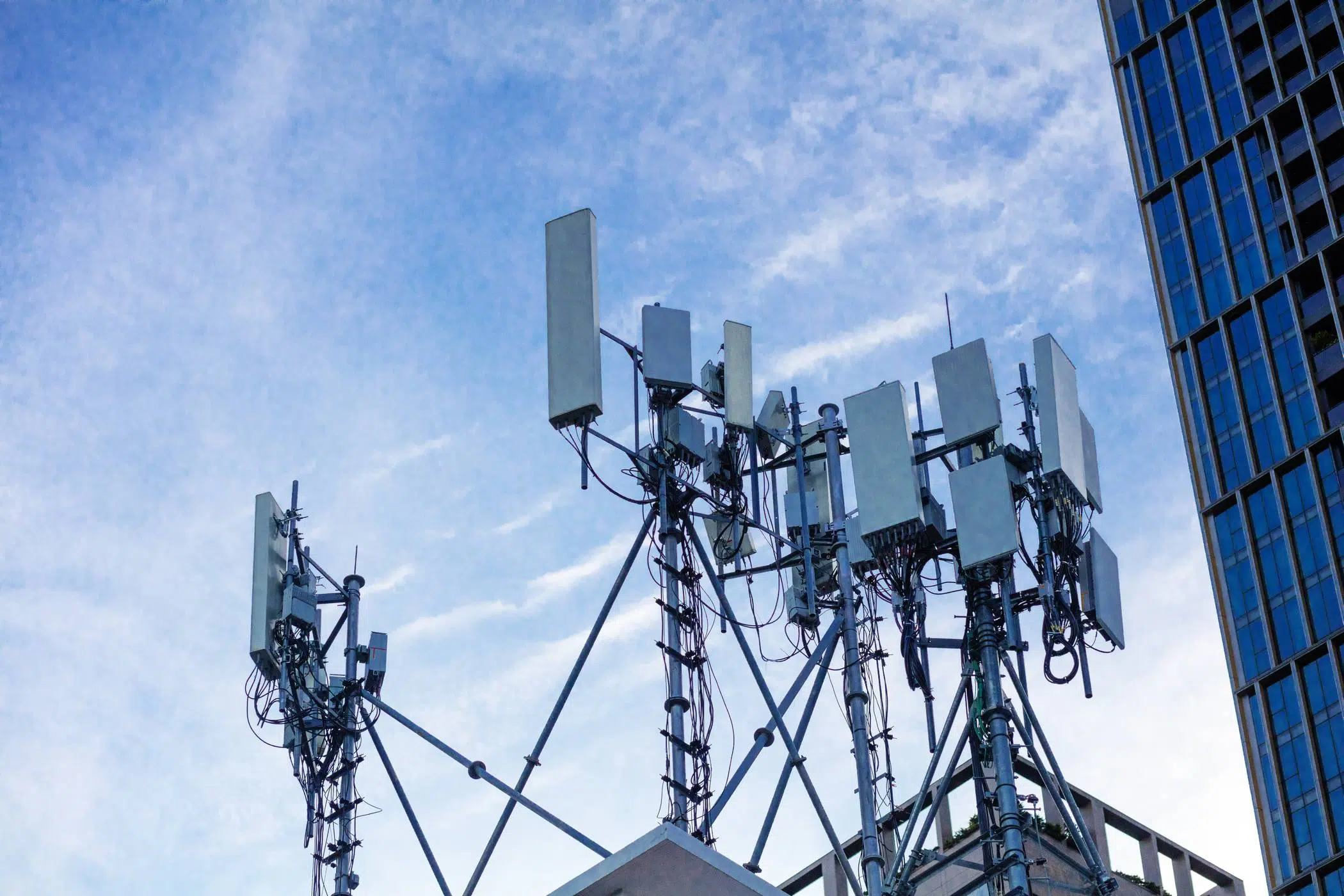
Across a distributed estate or mobile fleet, devices encounter different network conditions. A multi-network roaming SIM provides access to multiple mobile networks, reducing reliance on any single radio network. If the current network becomes unavailable, the device can register on another accessible network that supports the device’s radio technology.
Access to multiple radio networks supports resilience by giving a device alternative radio-network options. Where an application also requires resilience against a disruption affecting the operator core, CSL DualCore® architecture adds an independent mobile-core path.
CSL DualCore® adds an independent core to multi-network roaming
rSIM® technology delivers that architecture within one device. It holds two independent multi-network roaming profiles on one SIM, each able to use multiple radio networks and each connecting through its own operator core. Rather than relying on radio signal strength alone, the SIM tests whether the active path is working. When its connectivity checks identify a failure that meets the configured switching criteria, the SIM selects the alternative profile and the modem re-registers using it.
Where several devices share a site connection, independent connectivity paths can instead be provided through the router. The CSL Router range covers fixed broadband with cellular failover as well as single-SIM and dual-SIM configurations. A CSL DualSIM® Router configured for core independence delivers the two independent mobile-core paths of CSL DualCore® architecture to every device behind it. For operational sites that also need greater bandwidth, CSL Outpost bonds up to four active mobile connections into one managed link. Outpost uses 4G modems as standard, with 5G available as an option, and traffic can continue over the remaining connections if one path fails.

How Ofcom calculates its scores
The Mobile Matters 2026 analysis is based on smartphone tests collected by Opensignal during everyday use. It assesses good mobile performance against three proposed thresholds: download speeds of at least 5 Mbit/s, upload speeds of at least 1.5 Mbit/s and a one-way response time of no more than 50 milliseconds. A test counts as good only when it meets all three thresholds. The overall score combines performance against these thresholds with the data connection success rate. Ofcom’s proposed benchmark is a score of at least 90 per cent for each network in each area.
Ofcom assigns each test to a single network and excludes tests conducted while a device is roaming. The findings therefore represent the performance of individual networks, rather than the combined resilience available through services that use multiple connectivity paths.
The findings reflect the locations and conditions represented within the smartphone sample. Changes to Ofcom’s methodology also mean that comparisons with earlier editions need care. Where appropriate, Ofcom compares the latest results with recalculated figures for the previous year. The figures represent average network conditions in the locations where consumers used their phones.
Ofcom’s interactive report and Map Your Mobile checker provide useful background on mobile performance by area, but should not be used alone to assess an IoT deployment. For fixed installations, CSL Signal Analyser 2 can survey multiple networks and help identify the strongest available network and optimum position for the device and aerial. For devices that move, the assessment should consider network availability across the expected operating area.
What to consider when specifying resilient connectivity
Whether devices operate at fixed sites or move across a wider area, the connectivity specification should establish:
- which mobile networks are available at a fixed location or across the device’s expected operating area
- whether the device or site router can move between available networks without manual intervention
- whether those networks are reached through one operator core or independent operator cores
- whether the radio technologies supported by the device remain appropriate for its expected locations and service life, allowing any future transition from 2G to be planned around operational requirements and network availability
Ofcom’s combined 2G and 3G share of 0.7 per cent relates specifically to smartphones. Many connected devices have different technology requirements and replacement cycles, so the figure does not indicate the level of continuing 2G use across IoT estates.
Build resilient connectivity with CSL
CSL works with customers to design new deployments, develop existing estates and manage technology transitions in a planned way. This includes aligning radio technology, network access and independent mobile-core paths with device lifecycles, operational requirements and network availability.
To discuss connectivity for your deployment or installed estate, contact sales@csl-group.com.