

What changes when a locker loses its connection
In its report on the 2024–25 financial year, Ofcom collected data on out-of-home parcel services, including deliveries and collections at lockers, shops and other locations away from the recipient’s home. These services accounted for 12 per cent of the 4.2 billion parcels measured. Ofcom describes this figure as indicative, as it is based on data from operators able to provide comparable figures (Ofcom, 2025a).
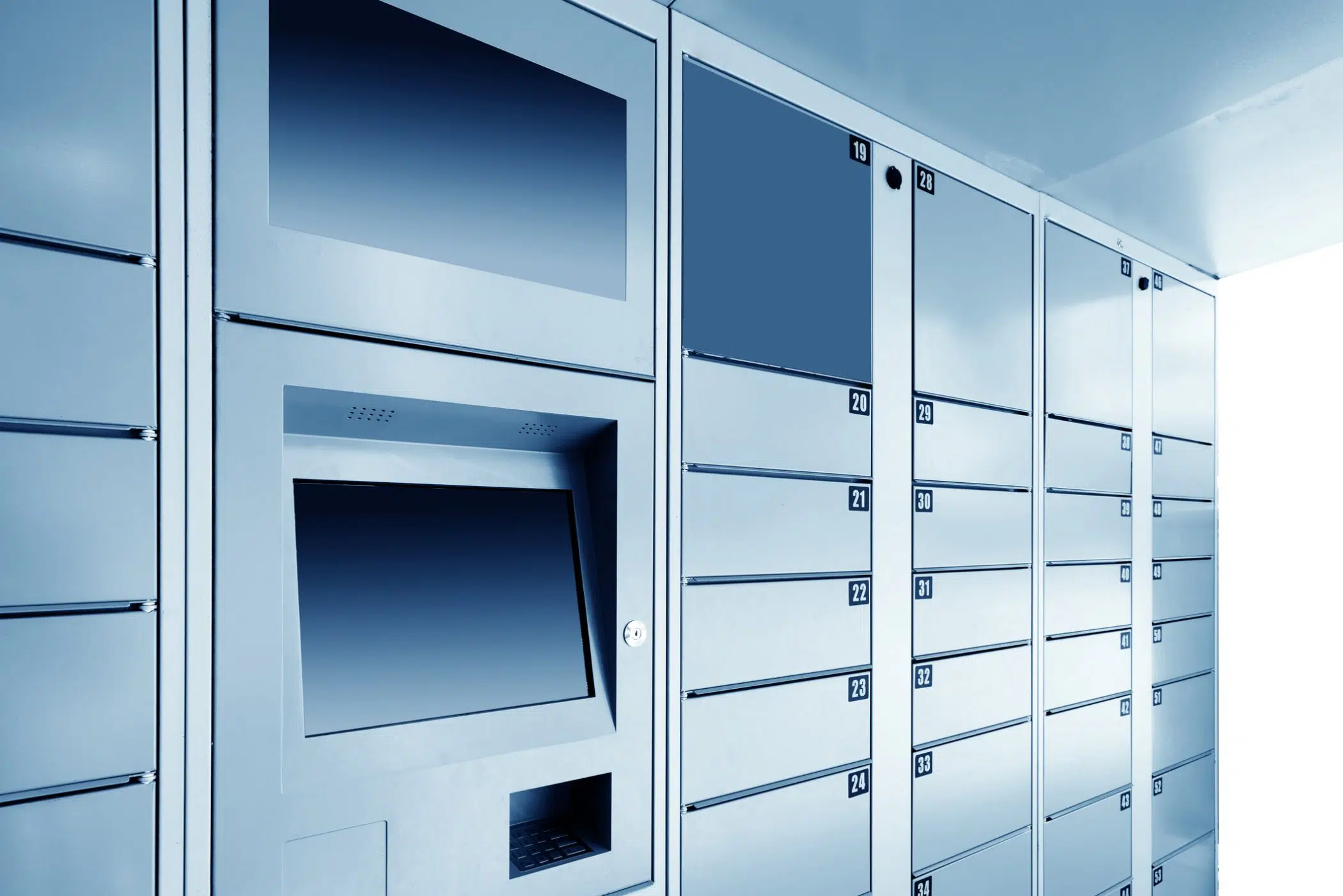
A connected locker can exchange operational data with the operator’s central systems, including deposit records, compartment availability, collections and faults. Maintaining that flow of data helps operators keep track of activity at each site. If the mobile connection drops, updates can be delayed, reducing visibility of locker status.
That visibility becomes particularly important during the year-end parcel peak. Ofcom’s quarterly figures show that October to December accounted for 29.5 to 29.8 per cent of domestic parcels in each of the last five financial years (Ofcom, 2025b). With more parcels moving through the network, connectivity interruptions during this period can have a greater operational impact.

Building resilience across a varied locker estate
Locker operators site their lockers where people regularly pass, including stations, supermarket car parks, shopping centres, residential developments and village sites. These locations present different connectivity conditions, so the mobile network that performs best at one site may not perform best at another.
Ofcom’s discussion paper on mobile performance, published on 3 June 2026, illustrates how performance varies by mobile network, location, building and time of day (Ofcom, 2026a).
Those differences are evident across a range of environments. Ofcom’s study of nine public buildings in Greater Manchester, including shopping centres and transport interchanges, found marked variations between buildings and mobile networks (Ofcom, 2026a). Ofcom’s subsequent Mobile Matters report, based on more than 225 million data points collected between August 2025 and July 2026, provides further analysis of mobile performance across networks, technologies and geographical areas (Ofcom, 2026b).
For locker operators managing sites across these varied environments, multi-network connectivity provides flexibility to accommodate local coverage differences. rSIM builds on this by routing its two profiles through separate mobile operators’ core networks, adding core-network resilience alongside access to multiple radio networks.

How rSIM keeps a locker reporting
rSIM holds two independent multi-network profiles on a single SIM. Each profile routes through a separate mobile operator’s core network, which is the basis of CSL DualCore® architecture. For locker operators, this brings multi-network access and core-network resilience together without requiring two physical SIMs or a second SIM slot.
The SIM tests its connection at configurable intervals, independently of the locker in which it is installed. If the active profile fails these tests for a configured period, rSIM switches automatically to the second profile and its separate core network. Once the original service recovers, the SIM returns to its primary profile. The locker’s software does not need to initiate or manage either switch, reducing the integration work associated with device-controlled switching
This single-SIM approach can simplify deployment across a locker estate by avoiding the need to accommodate a second physical SIM and keeping the switching logic within the SIM itself. CSL can help operators assess equipment requirements and plan implementation across new and existing sites.
CSL gives operations teams centralised visibility of rSIM connections, including the active profile and SIM events, helping to simplify day-to-day management across the locker estate.
Find out more
rSIM is used across applications including telecare, healthcare, point-of-sale payment devices, lone-worker protection, CCTV and EV charge points.
To discuss how rSIM could support connectivity across a parcel-locker estate, contact the CSL team.
Sources
- Ofcom (2025a). Post monitoring report: postal services in the financial year 2024-25. Published 3 December 2025.
- Ofcom (2025b). Annual monitoring report on the postal market: interactive data, financial year 2024-25. Published 3 December 2025. Quarterly shares calculated from Ofcom’s domestic parcel volumes.
- Ofcom (2026a). Connectivity you can count on: a discussion paper on achieving good, reliable mobile performance. Published 3 June 2026.
- Ofcom (2026b). Mobile Matters: Interactive report 2026. Published 16 October 2026.