

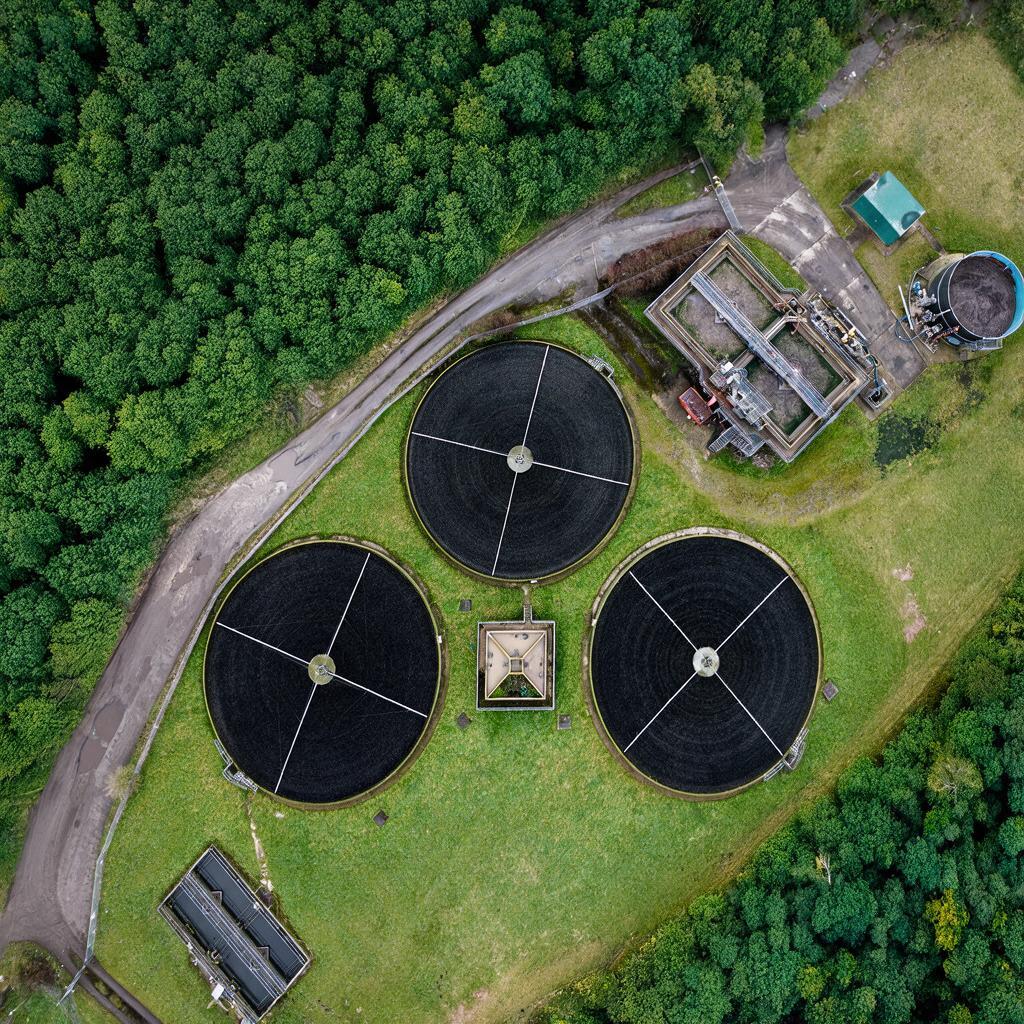
Severn Trent operates one of the UK’s largest water and wastewater networks – hundreds of geographically dispersed, often unmanned sites including pumping stations, treatment works and utility compounds. Many sit in rural locations where fixed-line connectivity is either unavailable or unreliable. Every one of them requires continuous intruder detection, CCTV monitoring and access control. When the PSTN sunset removed the last fallback, the gap between what these sites needed and what standard connectivity could offer became impossible to ignore.
Without secure connectivity, critical sites were operating exposed
Severn Trent faced a problem that broadband couldn’t solve. Reliable fixed-line connectivity simply didn’t exist across much of the network. Without secure IP connectivity, alarm signaling and CCTV monitoring couldn’t be consistently maintained – increasing operational risk and slowing incident response. At the same time, rising cybersecurity and governance requirements for critical national infrastructure operators meant that adding connectivity wasn’t enough. It had to be secure, standardized and built to last.
The challenge wasn’t connectivity for its own sake. It was establishing a resilient, repeatable architecture capable of protecting nationally significant assets for the long term.
A secure cellular architecture engineered for the environment, not adapted to it
CSL Group designed and delivered a secure cellular connectivity architecture engineered specifically for remote, unmanned sites. SecuriPlex managed the integration with intruder alarms, CCTV and access control systems on the ground.
The connectivity layer was built around dual SIM resilience – automatically selecting across mobile operators to maintain availability even where individual network coverage is variable. Encrypted VPN tunnels run from each site into secure monitoring infrastructure, with full network segregation keeping security systems off the public internet entirely.
Cellular wasn’t deployed as a fallback here. Where no fixed-line option existed, it became the primary connection – purpose-built for the environment, not compromised by it.
Continuous monitoring across a network that was previously difficult to protect
Sites that were previously unconnected or poorly served now maintain continuous monitoring. Legacy PSTN reliance is gone. Incident response is faster, engineer callouts linked to connectivity failures have reduced, and Severn Trent has a standardized, scalable deployment model ready for future sites.
The result is consistent, real-time visibility and control across a distributed network – at the scale critical national infrastructure demands.
Managing remote or unmanned sites where standard connectivity falls short?
If your site network extends beyond where fixed lines reach, the connectivity underpinning your safety and security systems needs to be engineered for that reality. Talk to us about how we can support your site network.